
Ask most fleet operators what’s driving up their running costs, and tyres won’t be far from the top of the list.
They wear fast. They get damaged. They’re expensive to replace. And if they fail on the road, they cost you more than just money – they cost you time, customers, and reputation.
Fleet tyre management isn’t a fancy buzzword. It’s just about getting a grip on something that’s already costing you – and finding smarter ways to stay ahead of it.
So, What Exactly Is Fleet Tyre Management?
Put simply: it’s how you track, maintain, and manage the tyres across your fleet — from the moment they’re fitted, through every inspection, all the way to replacement.
That might sound obvious, but the way you do it makes a big difference.
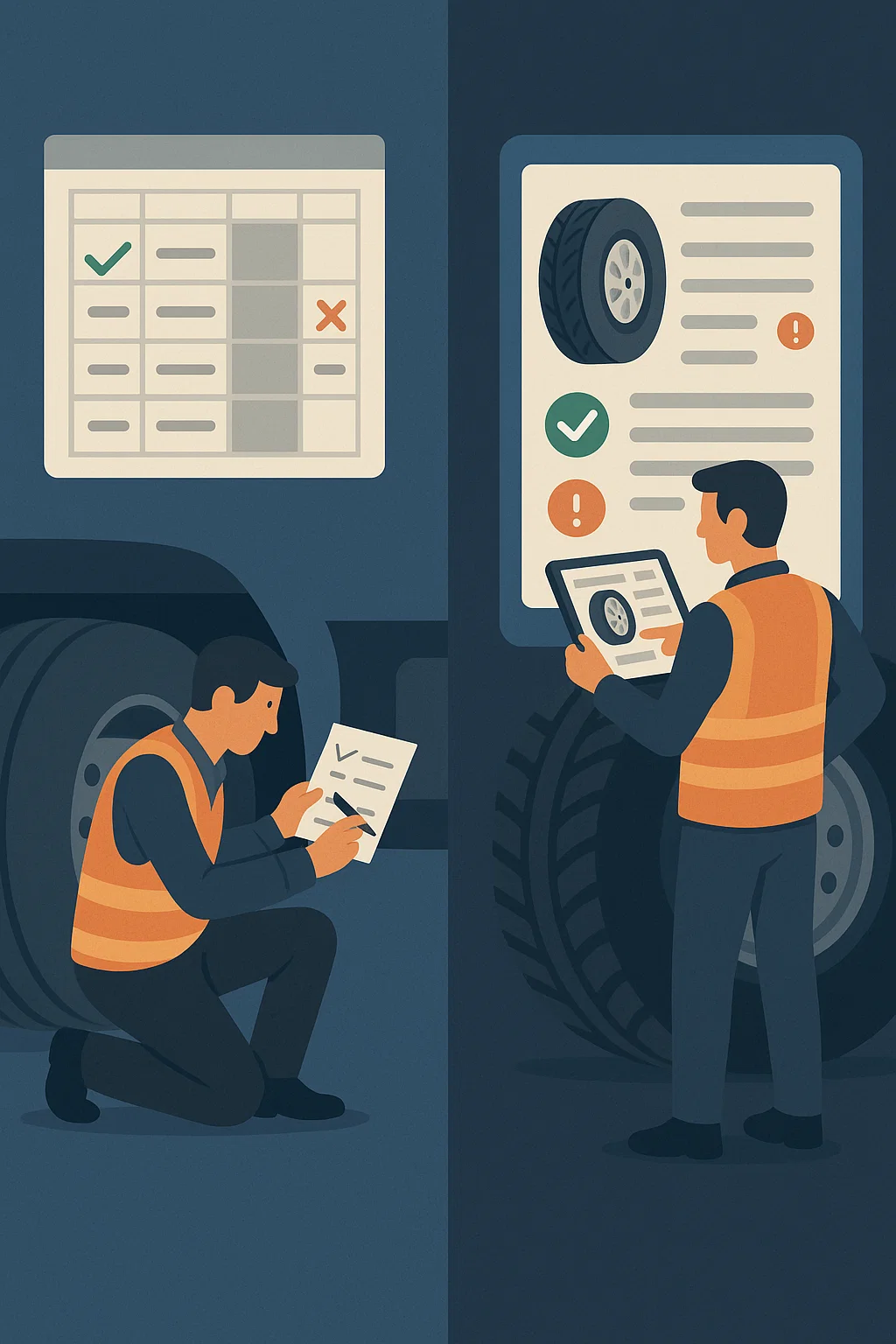
For some, tyre management means reacting when there’s a problem. A tyre gets flagged. It gets replaced. Job done.
But for more switched-on fleets, it’s about staying one step ahead:
- Spotting early wear before it becomes a breakdown
- Scheduling replacements instead of rushing them
- Keeping records so you know what’s working — and what’s not
- Making sure the right tyres are fitted to the right vehicles at the right time
It’s not about doing more – it’s about doing it better.
Why It Actually Matters (More Than You Think)
Downtime
If a vehicle’s stuck at the side of the road because of a blown tyre, everything else grinds to a halt. And often, that downtime could’ve been avoided with better tracking or pressure checks.
Running Costs
Tyres are expensive. Replacing them too early wastes money. Replacing them too late causes damage elsewhere. Good tyre management helps you hit that sweet spot – not too soon, not too late.
Plus, keeping pressures right and wear even means better fuel efficiency, too.
Safety & Compliance
When tyres are in poor condition, you’re not just risking the vehicle – you’re risking lives. You’re also opening the door to fines, failed inspections, or issues with your operator’s licence.
Proper records, regular checks, and having a system in place? That’s how you stay covered.
Where Most Fleets Slip Up
In a lot of cases, tyre management just isn’t centralised. One person handles inspections. Another arranges replacements. Notes get lost. Checks get missed. Nobody knows exactly what’s on each axle, or when it was last looked at.
That’s where things go wrong.
When data’s scattered, problems get hidden or missed – until they show up when it’s already too late.
What a Good System Looks Like
A proper fleet tyre management setup gives you:
- A clear history for every tyre on every job
- Inspection schedules that don’t get missed
- Alerts for pressure, tread depth, damage, or replacements
- One place where fitters, drivers, and fleet managers can all access the same info
- Reports that help you spot trends and improve
This is exactly what TyreOps was built for. It’s not there to create more admin. It’s designed to cut through the noise – so you can get a clear picture and act faster.
The Bigger Impact
Managing your tyres properly doesn’t just reduce risk – it improves how your entire fleet operates. Fewer breakdowns. Smoother maintenance. Lower costs. More uptime.
It’s not about doing something new. It’s about getting better at something you’re already doing – and using tools that make the job easier, not harder.
If you’re running blind when it comes to tyres, there’s a better way. And it starts with visibility.