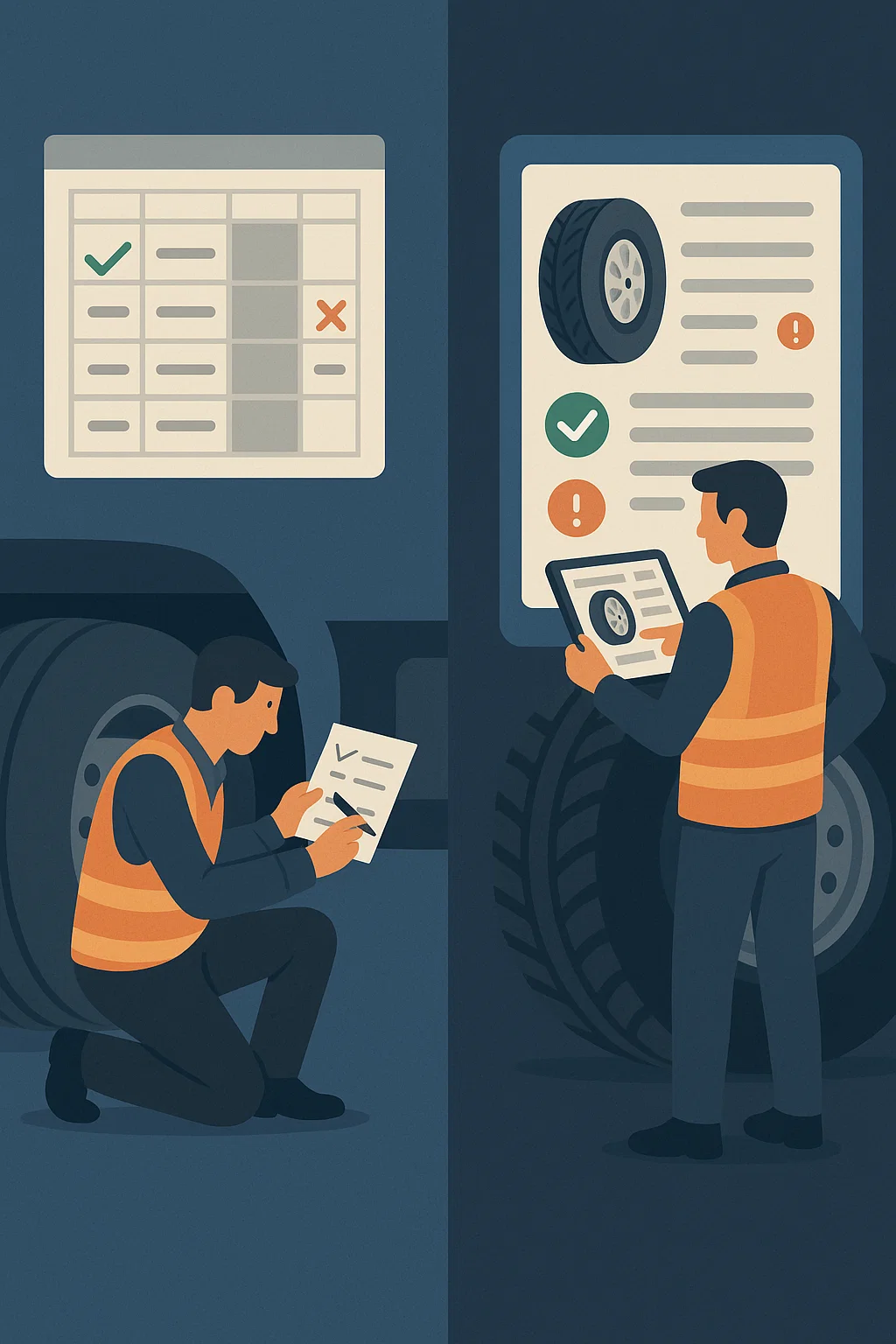

When fleets talk about tyre wear, most people think about alignment, tyre pressure or road conditions. What often gets overlooked is something far more fundamental: the load a vehicle is carrying. Overloading tyre wear is one of the quickest ways to destroy tyres, yet many fleets only realise the damage long after the tyre has been removed and written off.
As payloads increase and routes become more demanding, the cost of overloading tyre wear has started to catch the attention of fleet managers across the UK. Tyres that should last months suddenly fail early. Casings show heat damage that was entirely avoidable. Scrap piles grow, and budgets take the hit.
This is where TyreOps helps fleets take control. By linking load data with tyre events, the platform bridges the gap between what a vehicle carried and how the tyres behaved under that strain. This makes it far easier to understand why tyres fail and how to prevent unnecessary wear.
In this guide, we look at how overloading affects tyres, why traditional methods fall short and how TyreOps brings the full picture together so fleets can take proactive action.
Why overloading is so damaging to tyres
Tyres are designed to carry a specific load. When a vehicle exceeds that limit, even by a small margin, several things happen at once.
1. Heat builds rapidly
Overloaded tyres flex more as they rotate. This creates internal friction, which generates heat. Too much heat weakens the rubber, damages casings and increases the risk of blowouts.
2. Tread wears unevenly
Damage does not always appear across the whole tyre. Overloading often affects the shoulders first, leaving distinctive wear patterns that many technicians struggle to recognise without a reliable history.
3. Tyres lose structural integrity
The casing carries most of the structural load. Repeated overloading leads to sidewall bulging, ply separation and internal failure. Once damage reaches this point, the tyre is usually beyond repair.
4. Fuel consumption increases
An overloaded vehicle puts more resistance on the road surface. This added drag results in higher fuel use, which affects the fleet’s cost per mile.
The difficulty for most fleets is proving that overloading caused the wear. Without digital records, tyre failures are often written off as general wear and tear. TyreOps changes this by linking load behaviour directly to tyre events.

How TyreOps uses load data to explain tyre behaviour
TyreOps connects load information with tyre inspections, defects and scrap events. When this data is viewed together, fleets gain insight into whether a tyre failed because of overloading rather than a separate maintenance issue.
The platform uses several touchpoints to build this picture.
1. Integrating load data from telematics
Many modern telematics systems monitor payloads or axle loads. TyreOps can integrate this information and attach it to tyre events automatically. If a vehicle repeatedly ran above its intended limit, TyreOps flags the trend.
2. Linking load spikes to tyre defects
If a technician records a defect, such as shoulder wear or sidewall damage, TyreOps can show whether the vehicle carried excessive loads during that period. This helps determine whether the fault is operational or mechanical.
For fleets that want to understand how this event tracking works, the Tyre Event Tracking Overview provides a detailed explanation.
3. Connecting scrap decisions with historical load behaviour
When a tyre reaches the end of its life, TyreOps links the scrap reason back to previous inspections and load events. This helps fleets distinguish between genuine tyre failures and avoidable operational wear.
4. Identifying patterns across vehicles and routes
Some routes consistently produce overloaded vehicles. Others rarely cause issues. TyreOps makes these patterns clear so operations teams can adjust planning, loading processes or driver behaviour.
Why traditional methods fail to spot overload damage
Before digital systems, overloading tyre wear was nearly impossible to prove. Depots recorded inspections differently, notes got misplaced and technicians had no way to see what a vehicle carried on past journeys.
Some of the biggest limitations included:
- No direct link between load data and tyre events
- Different depots recording wear inconsistently
- No photographic evidence of heat or shoulder damage
- Tyres scrapped without understanding the root cause
- No simple method for comparing wear across vehicles
TyreOps solves these problems by capturing evidence at each stage of the tyre’s lifecycle.
How TyreOps turns overload data into actionable insights
Information is valuable only if it leads to change. TyreOps does more than store data. It turns it into insights that fleet managers can use to reduce overloading tyre wear and improve overall performance.
1. Depot-level comparisons
TyreOps shows which depots consistently produce tyres with overload-related wear. This helps standardise training and policies.
2. Identifying high-risk vehicles
Some vehicles are overloaded more often than others. TyreOps highlights these assets so managers can investigate whether the cause is operational or route-specific.
3. Improving tyre selection
When fleets understand how much strain their tyres face, they can choose models that handle heavier loads more effectively.
4. Reducing premature scrap
A tyre scrapped early due to overloading is a direct cost to the business. With clearer evidence, TyreOps helps reduce unnecessary removals and improve overall tyre utilisation.
These insights also feed into broader fleet cost strategies, which are covered in the Fleet Tyre Cost Analysis tools.
FAQs
How does overloading cause tyre wear?
Overloading causes rapid heat build-up, uneven tread wear and internal casing damage. It is one of the most common causes of premature tyre failure.
Can TyreOps link load data with tyre events?
Yes. TyreOps integrates load information with inspections, defects and scrap events to help fleets understand exactly why tyres fail.
Does TyreOps help reduce tyre costs?
By identifying overloading patterns and linking them to wear, TyreOps helps fleets prevent premature tyre failures and avoid unnecessary replacements.
Can TyreOps highlight specific depots that cause more wear?
TyreOps compares depots, vehicles and routes so fleet managers can address inconsistent behaviours.
Does tyre overloading affect fuel consumption?
Yes. Heavier loads increase rolling resistance, which raises fuel consumption and operating costs.