
Downtime is part of the job when you run a fleet, but it shouldn’t be the norm.
Ask anyone in transport or logistics, and they’ll tell you: it’s the unexpected stuff that causes the real problems. Vehicles off the road. Delays you can’t plan for. Deliveries that don’t go out because something’s gone wrong.
More often than not, it comes down to tyres.
Tyres Are Still One of the Top Causes of Unplanned Downtime
It sounds basic, but if you’ve ever dealt with a last-minute blowout, a pressure-related warning light, or tyres worn unevenly because no one rotated them in time, you’ll know how easily they can derail a day.
The worst part? Most of it’s avoidable.
And that’s exactly where proper tyre tracking makes a difference.
So What Does “Tyre Tracking” Actually Mean?
It’s not just about logging tyre sizes in a spreadsheet.
Tyre tracking means keeping tabs on:
- How tyres are wearing over time
- If pressures are staying where they should be
- When a tyre was last rotated, replaced or repaired
- Which brands are lasting and which aren’t pulling their weight
It gives you a clearer view of what’s happening before something fails.
Without that kind of visibility, you’re basically reacting to problems as they happen – or relying on someone to flag it before it’s too late. That’s risky.
Why It Matters for Reducing Downtime
Here’s the reality: if a vehicle’s off the road because of a tyre issue, it doesn’t really matter how good the rest of your operation is.
You’re either letting customers down, losing money, or rushing around trying to organise backup. And that’s before you deal with the admin.
With the right tracking setup, you can:
- Spot issues early
- Avoid missed checks
- Replace tyres at the right time (not too soon, not too late)
- Cut down on emergency callouts
- Plan maintenance without the chaos
It’s not about fancy tech. It’s about staying one step ahead.
Why Most Systems Fall Short
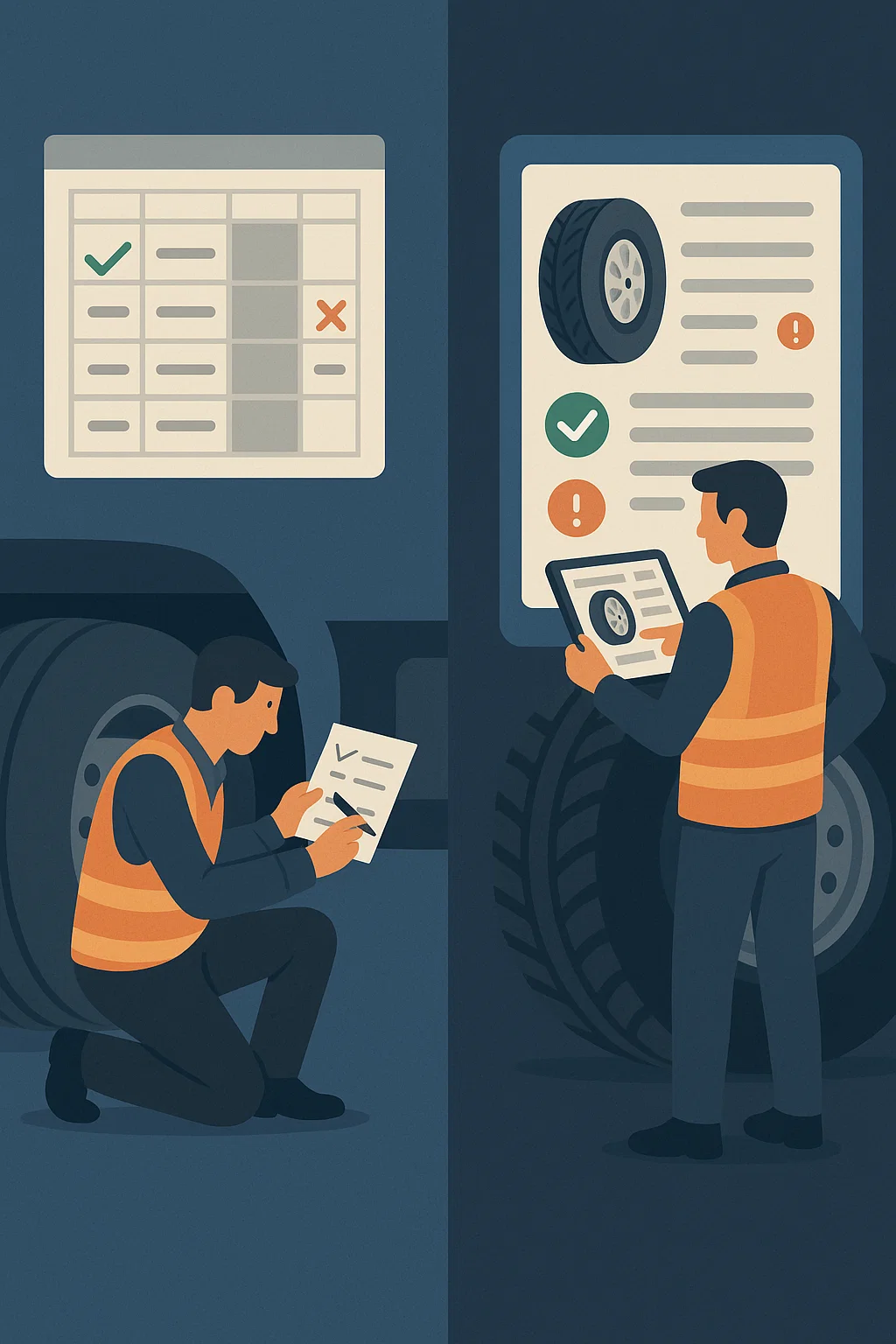
Let’s be honest, a lot of fleets still rely on paper forms, inbox chains, or someone “keeping an eye on it.” And while that might work for a handful of vans, it doesn’t scale.
What ends up happening is:
- Inspections get missed
- Tyres get reused when they shouldn’t
- The wrong tyre goes back on the wrong axle
- Nobody’s quite sure when replacements happened
And then when a tyre goes, everyone’s scrambling.
What TyreOps Does Differently
TyreOps was built to fix this. It’s not just another system – it’s a proper tyre management platform designed around how fleet businesses actually work.
It lets you:
- Log tyre activity across the fleet
- Track each tyre’s full lifecycle
- Keep everyone in the loop – fitters, fleet managers, finance
- Set reminders and alerts
- Pull reports without sifting through paperwork
You don’t need to guess anymore – the data’s all there.
The Bigger Picture
Here’s the thing: if you’re trying to keep vehicles on the road, control spend, and run a tight operation, tyres are a big part of that puzzle.
The difference between “just keeping up” and actually getting ahead? It often comes down to knowing what’s happening with your tyres before something goes wrong.