
Running a fleet in the UK isn’t just about keeping vehicles on the road – it’s about keeping everything compliant.
Between DVSA spot checks, operator licence requirements, and tightening safety rules, there’s a long list of boxes that need ticking. Miss just one, and it’s not just a fine you’re risking – it’s downtime, reputation damage, or worse.
So if you’re managing vehicles, drivers, or tyres in any commercial capacity, it pays to stay sharp.
Here’s a no-fluff checklist to help keep your fleet safe, legal, and ahead of trouble.
Daily Walkaround Checks
These aren’t a “nice to have” – they’re a legal must. Every commercial vehicle needs a recorded check before it hits the road.
What needs inspecting:
- Tyres (pressure, tread, visible damage)
- Lights, indicators, mirrors
- Brakes and warning lights
- Windscreen and washers
- Load security
- Bodywork and step access
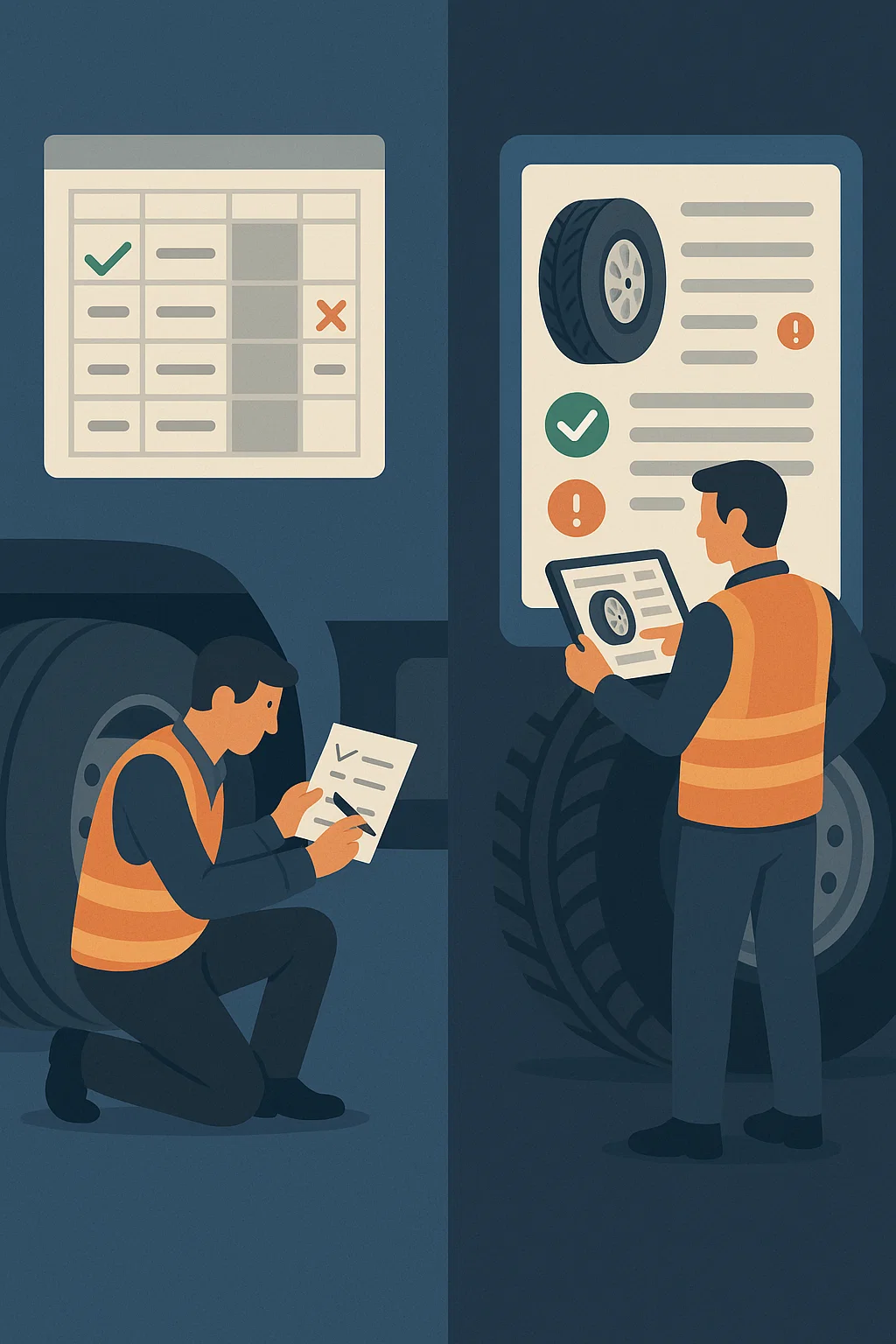
Tip: Digital tools like TyreOps can help standardise tyre inspections, so you’re not relying on someone remembering or scribbling notes that go missing.
Tyre Condition & Record Keeping
Tyres are one of the top reasons vehicles fail roadside checks.
Make sure:
- Tread depth is legal (minimum 1.0mm for HGVs and 1.6mm for Cars and Vans)
- Pressures are correct for load and axle
- Tyres are free from sidewall damage or cords
- Valve caps are fitted
- All inspections and replacements are logged
Bonus: Track tyre lifespan and rotations to avoid premature wear or unnoticed issues. This also helps prove due diligence if ever challenged.
Driver Checks & Responsibilities
Fleet compliance isn’t just about vehicles. Drivers have a legal duty too.
Make sure all drivers:
- Hold the correct licence for the vehicle
- Have up-to-date CPC qualifications
- Are aware of hours-of-service limits (and stick to them)
- Know how to report defects
- Can access training or refreshers where needed
Tip: Keep digital records of all driver documents, training, and certifications so they’re ready when asked.
Maintenance Scheduling & Record Logs
A clean maintenance record speaks volumes during inspections.
You need:
- A clear schedule for each vehicle
- Pre-booked servicing and inspections
- A system to log repairs, faults, and downtime
- Proof of follow-up when defects are reported
Missed maintenance isn’t just non-compliance, it’s dangerous.
Operator Licence Requirements
If you’re running HGVs, you need to comply with the terms of your O-licence.
That includes:
- Operating centres meeting the right conditions
- Enough financial standing to run your fleet
- Adequate systems for safety and record-keeping
- Regular audits and self-checks
- Notifying the Traffic Commissioner of major changes
Remember: Your O-licence can be restricted or revoked if you don’t meet obligations.
Roadworthiness & Inspection Audits
Random checks do happen. You don’t always get a warning.
That’s why being inspection-ready 24/7 isn’t just best practice – it’s essential.
Good fleets:
- Keep up-to-date records of tyre checks, defects, and repairs
- Use systems that provide quick access to data
- Don’t leave it to paper folders in a back office
When the DVSA asks, you want answers in seconds, not a panic.
Why Digital Systems Make This Easier
Trying to manage compliance on paper, across multiple sites, with different people responsible? That’s where things get missed.
TyreOps gives you:
- A proper digital trail
- Standardised tyre inspection processes
- Instant access to tyre and defect history
- Accountability across your team
It’s built to make compliance a daily habit, not a last-minute fire drill.
Staying Ahead
Fleet compliance isn’t just a box-ticking exercise, it’s what keeps your vehicles moving, your drivers safe, and your business protected.
Whether you manage five vans or a nationwide haulage operation, the rules are the same. The difference comes down to how you stay on top of them.
And the fleets doing it best? They’re using the right tools to keep things simple.