It’s one of those simple checks that often gets brushed aside — but tyre tread depth can be the difference between a safe journey and a serious incident.
For fleet operators, it’s not just about safety either. It’s about compliance, cost, and cutting the risk of downtime that wrecks your schedule.
So how often should tread be checked? And what’s the best way to stay on top of it across an entire fleet?
Let’s get into it.
Why Tread Checks Matter (More Than People Think)
Tread depth affects everything:
- Braking distance
- Grip in wet conditions
- Fuel consumption
- Risk of aquaplaning
But for fleets, it also affects your ability to operate legally.
If you’re found to be running on tyres below the legal limit (or even close to it), the consequences are real — fines, failed inspections, even the risk of losing your O-licence.
Worn tyres are one of the most common reasons for roadside prohibition notices. And often, it’s because nobody checked in time.
The Legal Minimum for Fleet Vehicles
For HGVs, vans, and most commercial fleet vehicles in the UK, the minimum legal tread depth is:
- 1.0mm across HGVs and 1.6mm for Commercial Vans
- A visible tread pattern across the remaining width
That’s the bare minimum — not the recommended level. Most tyres start to lose performance long before they hit 1.0mm.
Best practice? Flag tyres for replacement once they’re down to 2-3mm. By then, grip and safety are already compromised — especially in winter.
So, How Often Should You Check Tread?
Here’s the short answer:
Tyre tread should be checked daily, with a more detailed inspection weekly or fortnightly.
Here’s how it breaks down across a real-world fleet:
| Frequency | Who Checks | What to Look For |
| Daily | Driver | Quick visual check during walkaround (bald spots, damage) |
| Weekly/Fortnightly | Workshop/Fitter | Full inspection with depth gauge, look for uneven wear |
| Monthly | Fleet Manager Review | Spot-check data, plan ahead for replacements |
If you’re relying on someone to “just check it when they get chance”, chances are it’s not happening often enough.
Common Reasons Fleets Miss Tread Issues
- Rushed inspections or walkarounds
- No central record of previous tyre history
- Multiple sites doing checks in different ways
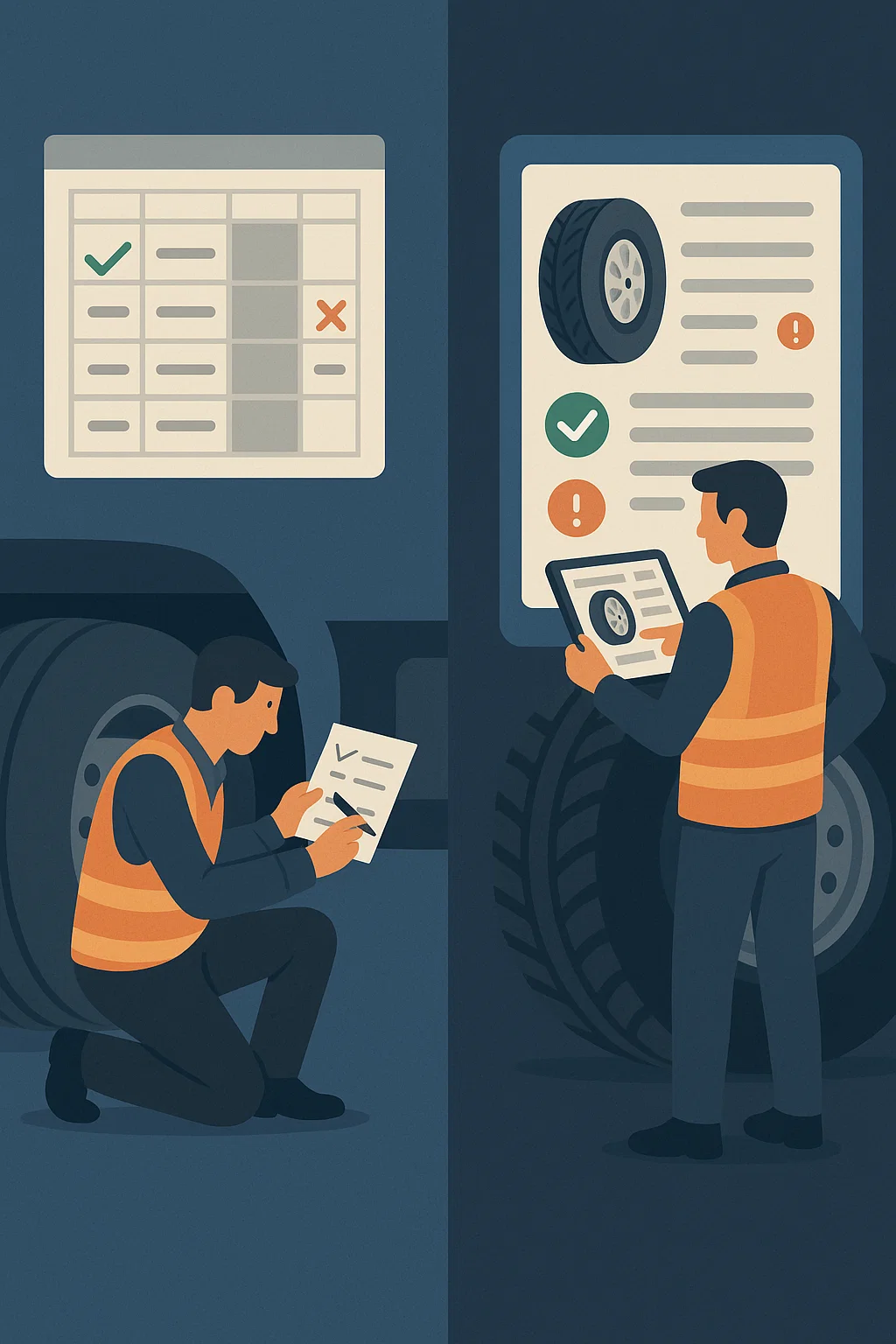
- Paper checklists that go missing or unread
By the time someone notices a tyre is borderline, the vehicle’s already on the road — or worse, already stopped at the side of it.
What Better Tread Tracking Looks Like
A good system doesn’t just check depth — it gives you a bigger picture:
- Logs tread readings over time
- Flags tyres that are wearing faster than expected
- Helps identify axle misalignment or pressure issues
- Tells you which brands are lasting longest
- Makes replacement planning predictable instead of rushed
That’s exactly what TyreOps is built for — to help fleets move from reactive to proactive when it comes to tyre health.
Why This Isn’t Just About Safety
Sure, safety’s the headline. But there’s a bigger benefit here — cost control.
Tread wear ties directly to:
- Fuel consumption
- Tyre replacement frequency
- Downtime due to blowouts or failed inspections
- Overall vehicle performance
When you’re running a fleet, the tyres that last longest — safely — are the ones that help you protect margins. And that starts with checking them properly, and often.