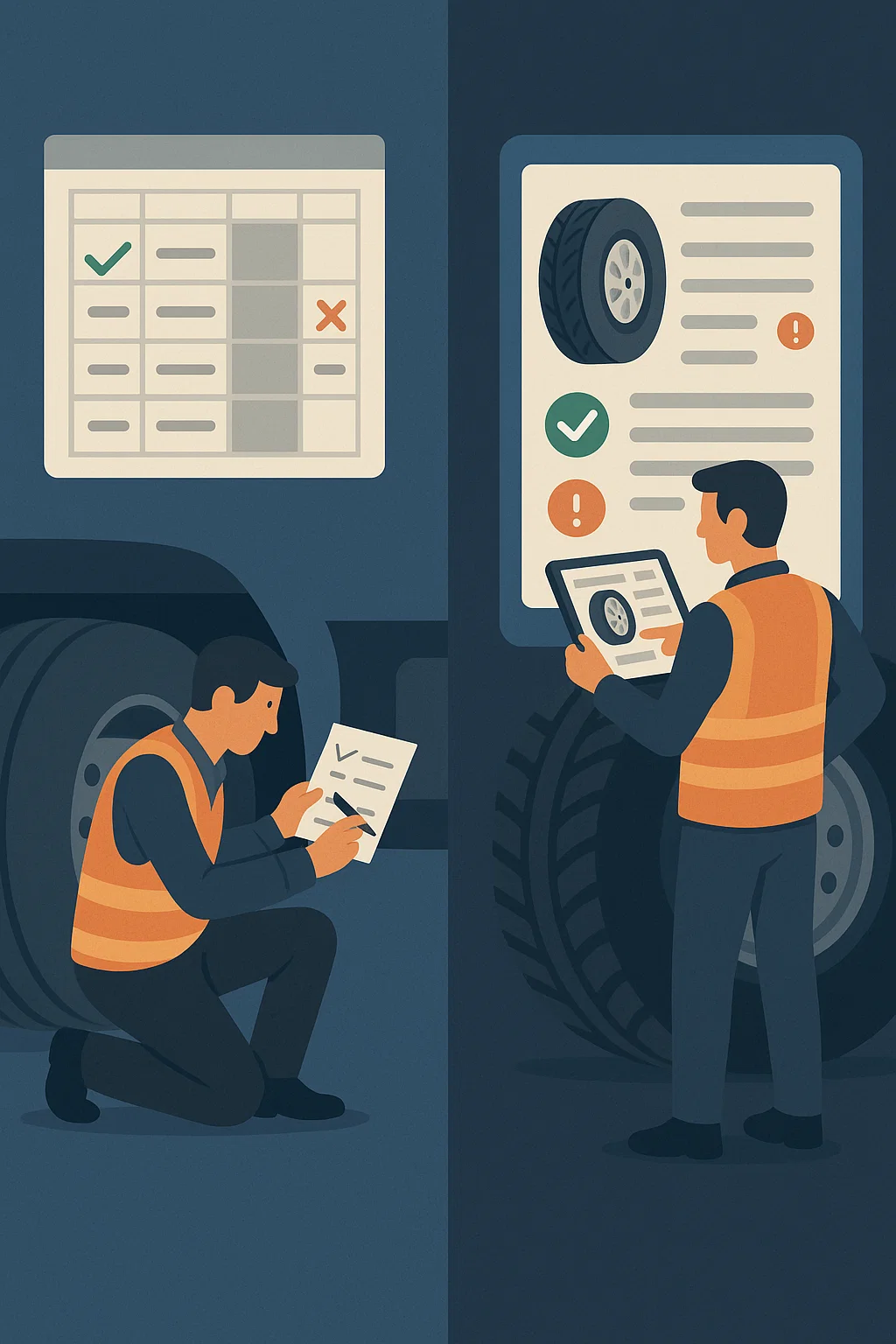

Across the fleet industry, very few costs slip under the radar quite like tyre waste. It creeps in quietly, often unnoticed, and it is only when you start asking where certain tyres went or why a batch seemed to disappear that you realise how much money leaked out of the operation. Most fleets do not waste tyres intentionally. It tends to happen because information is scattered, recorded inconsistently or never recorded at all. This is why so many operators are now focusing seriously on fleet tyre waste reduction.
When the cost of tyres is rising and margins are tightening, understanding exactly why tyres reach end of life sooner than expected has never mattered more. One of the easiest ways to gain this clarity is through digital scrap recording. TyreOps brings this process into a simple, repeatable workflow that gives fleets evidence, not assumptions.
In this guide, we explore how digital scrap tracking works, why it makes such a noticeable difference and how TyreOps helps fleets reduce waste across every depot.
Why fleets lose money through tyre waste
Most waste comes from small decisions that, on their own, do not look significant. A tyre gets removed early because a defect is misjudged. Another gets scrapped because no one can confirm whether it passed inspection last week. Sometimes tyres are simply misplaced. Without proper evidence, those casings will never be recovered.
There are a few common patterns that lead to unnecessary scrap:
- Tyres removed earlier than their safe working limit
- Lack of accurate inspection evidence
- No clear record of defect development
- Depot variation in tyre removal decisions
- Casing losses between locations
- Scrap reasons not being captured properly
- Retread opportunities going unnoticed
TyreOps was developed to tackle these operational blind spots. By standardising how scrap events are recorded, fleets gain far better visibility over how and why tyres reach end of life.
The role of digital scrap recording in fleet tyre waste reduction
When scrap events are logged digitally instead of through handwritten notes or depot spreadsheets, the entire decision-making process becomes clearer. TyreOps provides technicians with structured categories, photo capture options and prompts that help ensure scrap decisions are consistent across the fleet.
1. Capturing accurate reasons for scrap
The starting point is a clear understanding of why a tyre was removed. TyreOps gives technicians a choice of scrap reasons, which may include heat damage, structural failure, extreme wear, sidewall separation or repeated punctures. With photographic evidence attached, fleet managers can review the circumstances without relying on second-hand information.
2. Linking scrap decisions to wider lifecycle data
Scrap events do not live in isolation. TyreOps connects each scrap decision to the full tyre lifecycle, so managers can see what happened beforehand. This includes inspections, defects, pressure trends and any repairs carried out.
You can explore how this lifecycle reporting works here through the Tyre Lifecycle Reporting tools.
3. Identifying patterns across depots
One depot may be scrapping tyres too early. Another might be pushing tyres too far. TyreOps highlights these discrepancies quickly so operators can re-align behaviour and reduce avoidable waste.
4. Recovering more casings for retreading
Retreadable casings are one of the largest cost-saving opportunities for many fleets. When TyreOps records the condition accurately, more casings can be recovered and fewer end up in the scrap pile unnecessarily.
How TyreOps records scrap events step by step
TyreOps breaks down the scrap process into simple, guided actions so technicians can record the event accurately without slowing down their workflow.
1. Tyre removal event
Every scrap decision starts with a removal event. TyreOps prompts the user to record the tyre’s final position, tread depth and any visible signs of failure.
2. Selecting the scrap reason
Rather than relying on free-form notes, TyreOps offers defined options. Choosing a reason helps standardise the data and makes it easier to analyse later.
3. Adding photo evidence
Photos are vital for scrap validation. With TyreOps, they are attached directly to the event, ensuring no images are lost or misplaced. These photos later support audits and internal reviews.
4. Recording depot and technician details
Accountability is a key element in fleet tyre waste reduction. TyreOps records who made the scrap decision and at which location.
5. Linking future actions to tyre cost analysis
Once tyres are scrapped, TyreOps incorporates the event into cost reporting. This helps identify expensive disposal trends or unexpected failure types. More detail on this area is available within the Fleet Tyre Cost Analysis tools.
Why digital scrap tracking helps fleets save money
Scrap data is only useful when it leads to action. TyreOps helps fleets understand exactly where money is being lost and how to address it. Some of the biggest savings come from:
Spotting depot-level inconsistencies
If one depot scraps tyres earlier than others, TyreOps highlights the trend so you can investigate training, policy alignment or equipment issues.
Identifying operational causes of excessive wear
Patterned failures often point to alignment issues, loading behaviour or route-specific challenges. When scrap reasons are recorded consistently, these patterns become easier to spot.
Recovering more retreadable casings
Fleets often scrap tyres that could have been retreaded. With accurate digital evidence, retread partners have clearer information, reducing the chance of unnecessary rejections.
Reducing lost tyre movements
Misplaced tyres contribute to waste too. TyreOps prevents this by tracking tyre movements between depots. More on this can be found in the Depot-to-Depot Transfers workflow.
How scrap data improves fleet-wide decision making
TyreOps does more than record events. It brings the information together so operators can make decisions grounded in evidence. Over time, this leads to improvements in:
- Policy development
- Technician training
- Tyre brand selection
- Inspection frequency
- Maintenance planning
When all scrap data is linked to the wider tyre lifecycle, managers can pinpoint exactly when tyres are failing and why. This is the foundation of genuine fleet tyre waste reduction.
FAQs
How does TyreOps help reduce tyre waste?
TyreOps records scrap events consistently, linking them to tyre history, depot behaviour and inspection results. This helps fleets identify where waste occurs and how to reduce it.
Can TyreOps track why tyres are scrapped?
Yes. Scrap reasons are logged through predefined categories, supported by photos and technician notes.
Does TyreOps support multi-depot scrap reporting?
It does. TyreOps compares depot behaviour so fleets can spot inconsistencies and align tyre removal decisions.
Can scrap data help reduce tyre costs?
Absolutely. When fleets understand why tyres are failing, they can address root causes and reduce avoidable replacements.
Does TyreOps work with retreading partners?
Yes. Accurate scrap and inspection records help improve retread acceptance rates.