Ask any fleet manager how they’re tracking tyre inspections, and you’ll get a mix of answers.
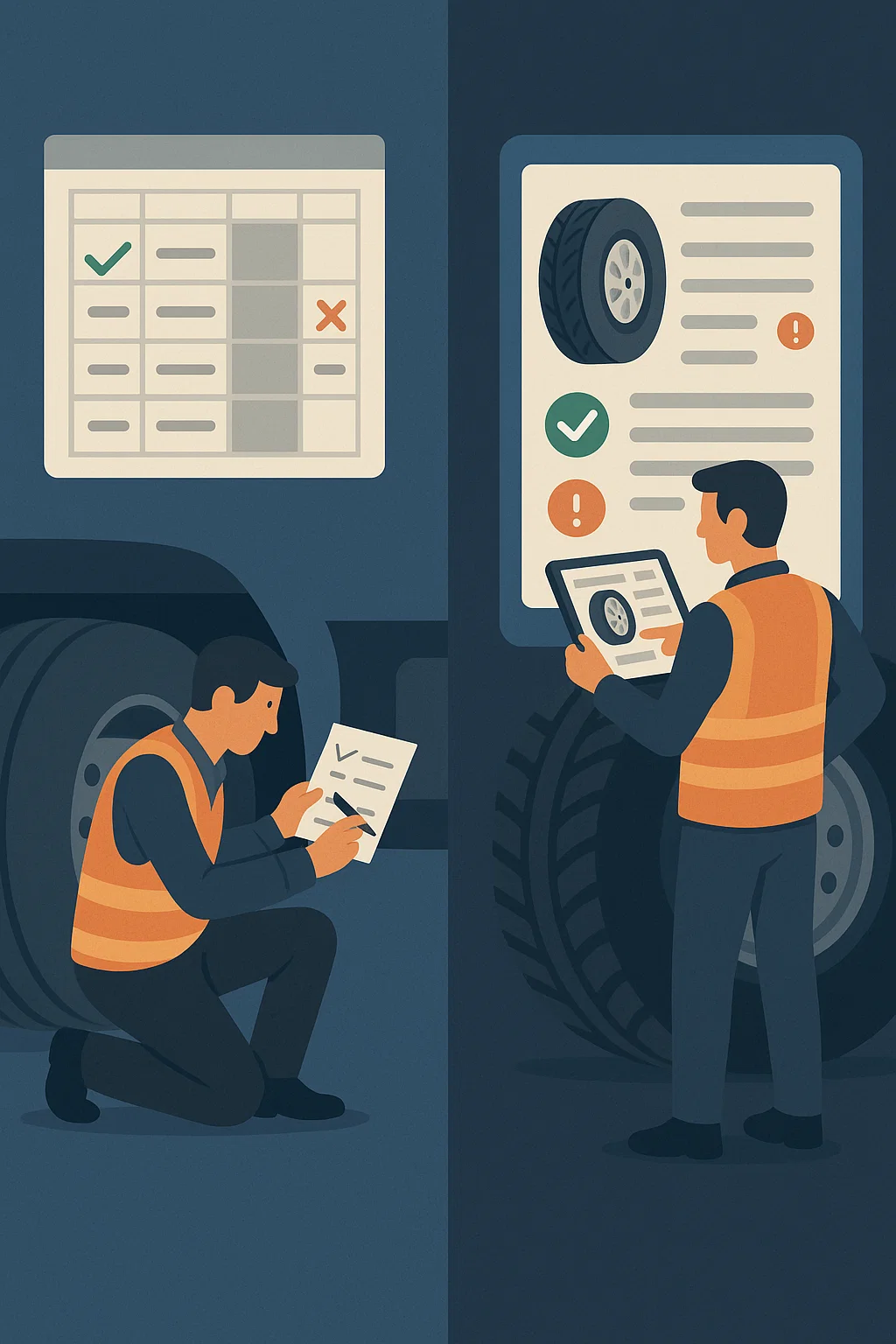
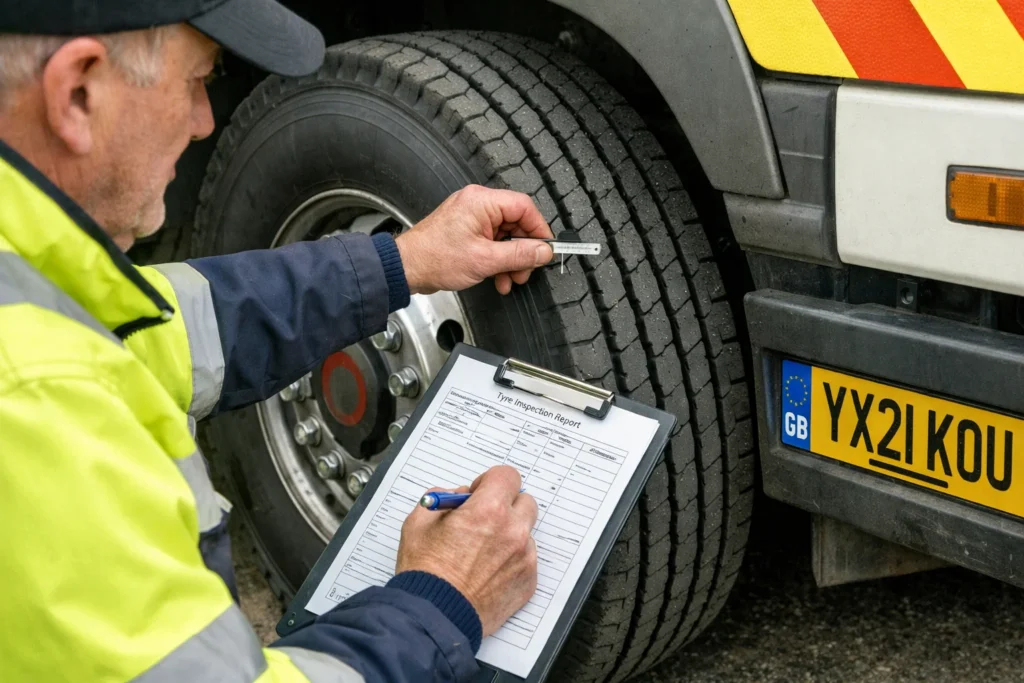
Some still rely on paper forms in the glovebox. Others use spreadsheets shared between depots. A few just trust their fitters and drivers to “keep an eye on it.”
Then there are those using platforms like TyreOps — where every tyre, every check, and every action is tracked automatically, in one place.
So what’s the actual difference? And is switching from manual to digital really worth the hassle?
Here’s how it stacks up.
The Problem with Manual Logging
Manual systems tend to grow organically — a checklist here, a folder there, maybe a spreadsheet someone started five years ago.
And while it might get the job done for a while, it doesn’t take much to start seeing cracks.
Common issues include:
- Missed inspections or no record of them
- Inconsistent tyre history across vehicles
- No easy way to track tyre wear or lifespan
- Lost paperwork or forgotten notes
- Poor visibility between teams (fitters, managers, drivers)
- Compliance risk if records aren’t complete or traceable
When something goes wrong — like a blowout or DVSA inspection — suddenly everyone’s scrambling to find records that don’t exist.
What TyreOps Does Differently
TyreOps was built specifically for fleets. No generic forms. No cobbled-together spreadsheets. Just clear, consistent tyre management — start to finish.
With TyreOps, you get:
- Digital inspections logged in real time
- Full tyre history across all vehicles
- Alerts for low tread, pressure issues, or overdue checks
- Centralised reporting and audit trails
- Visibility across teams and sites
- Easy tracking of tyre performance, cost, and lifespan
And it’s all accessible from anywhere — no more chasing bits of paper or waiting for someone to “drop the file off.”
Side-by-Side Comparison
Here’s how it looks in practice:
| Feature | Manual Logging | TyreOps |
| Inspection Logging | Paper forms / spreadsheets | Digital, time-stamped entries |
| Record Accuracy | Relies on memory / penwork | Automated with photo evidence |
| Tread & Pressure Alerts | Manual monitoring only | Real-time alerts and reminders |
| Tyre Lifecycle Tracking | Difficult or incomplete | Full history from fit to disposal |
| Team Collaboration | Fragmented across sites | Shared system for all users |
| Compliance Audit Readiness | High risk of missing data | Full digital trail, instantly accessible |
| Cost Insight (PPK) | Basic cost tracking | Compare tyres by Price Per Kilometre |
Cost Isn’t Just About Tyres
One of the biggest mistakes is only thinking about tyre cost in terms of purchase price.
But what about:
- The labour time lost chasing missing info?
- The downtime from missed tread checks?
- The fuel wasted on underinflated tyres?
- The extra tyres replaced too soon (or too late)?
- The risk of losing your O-licence due to poor records?
When you stack all that up, manual logging isn’t free — it’s just quietly expensive.
With TyreOps, you’re not only tracking inspections. You’re choosing the right tyres, getting better mileage, and managing cost on a Price Per Kilometre basis — not just gut feel.
That’s where the real value is.
What Fleet Managers Are Saying
Most fleets don’t switch to digital because someone sold them software. They switch because they hit a wall with manual systems.
The notes were getting lost.
The depot manager was off sick.
The DVSA turned up.
A tyre failed and nobody had a record of when it was last checked.
That’s usually the wake-up call.
Final Word
Manual logging might seem like it’s working — until it isn’t.
TyreOps gives you a clearer view of your tyres, tighter control over your costs, and peace of mind knowing your fleet is compliant, covered, and connected.
If you’re still relying on pen and paper, ask yourself: what’s it costing you?