
If you’ve ever lost time chasing paperwork, missed a service date, or had no idea when a tyre was last checked – you already know why Vehicle Management Systems exist.
A VMS isn’t some fancy buzzword. It’s just a tool that helps keep your fleet organised, running smoothly, and out of trouble.
Let’s break it down.
What Actually Is a VMS?
VMS stands for Vehicle Management System. It’s a digital setup that pulls all your fleet info together, so you can stop relying on whiteboards, memory, and guesswork.
At a basic level, it helps you:
- Log services, MOTs, inspections
- Track mileage and repairs
- Set reminders for upcoming work
- Keep hold of documents (not lose them in the cab)
- Manage tyre checks and replacements
- See what’s been done, what’s overdue, and what’s next
Some platforms go even further – pulling in tyre data, cost tracking, and team activity in real time.
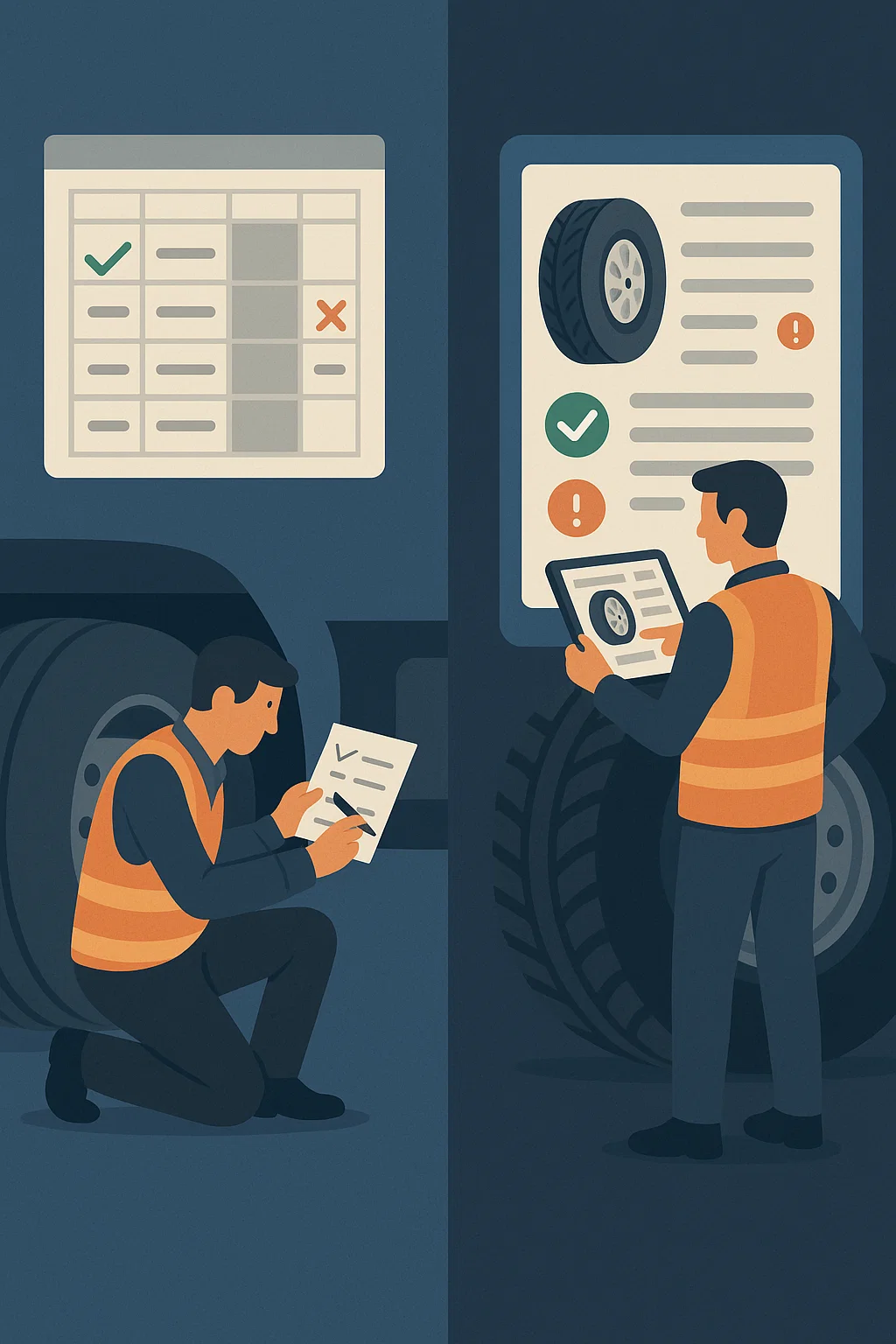
Why Manual Systems Fall Apart
A lot of fleets still rely on spreadsheets and paper logs. It works for a while. Until something gets missed.
That’s when problems start:
- A tyre fails and there’s no record of the last check
- A vehicle misses servicing and ends up off the road
- You get asked for compliance records and… no one’s sure where they are
- The DVSA turns up and someone’s “still filling the forms in”
And suddenly, the small stuff you meant to sort becomes a big problem.
How a VMS Makes Life Easier (and Cheaper)
It’s not about adding another system. It’s about replacing all the little broken ones – the notes, the texts, the spreadsheets nobody updates.
Here’s what changes:
Less downtime
You’ve got a live calendar of what needs doing and when. Vehicles don’t sit waiting for inspections or get taken off the road for issues you could’ve caught earlier.
Tyres don’t get ignored
With something like TyreOps, you’re not just logging tyre changes – you’re tracking pressure, tread depth, wear rates, repairs, and actual cost over time.
You stay compliant
No more “I think we did that last month.” You’ve got records. Time-stamped. Complete. Easy to show to whoever needs to see them.
You get better at planning
You can see which tyres are lasting, which vehicles are costing the most, and which suppliers are giving you value. Helps with budgeting. Helps with ordering. Just helps.
Why TyreOps Works for This
Plenty of systems do the basics – mileage tracking, service logs, reminders.
TyreOps goes deeper. It’s built around tyre performance, which for most fleets is one of the biggest ongoing costs.
What you get:
- Full tyre history per vehicle
- Team-wide visibility (fitters, drivers, managers)
- Easy planning for replacements
- Real-time data you can actually use
- The ability to compare tyre brands on Price Per Kilometre
- No more paperwork to lose
You don’t need to chase people. You just open the system, and it’s there.
Worth Thinking About
Most fleet teams don’t switch to digital until they’ve had something go wrong. A missed inspection. A tyre that fails. A compliance audit that doesn’t go well.
But by then, it’s already cost you.
A VMS isn’t about having something fancy. It’s about being able to say:
“We know what’s going on with every vehicle, every tyre, every week.”
And that’s a much better place to be.