When you manage a commercial fleet, every small detail adds up. Fuel, maintenance, tyres, and downtime all eat into margins, and often it is the little things that quietly drain the most money. Tyre pressure is one of them.
It might not seem like a big deal, but the impact of tyre pressure on fuel efficiency in commercial fleets is significant. Underinflated tyres create more drag, burn more fuel, and wear out faster. Over time, this leads to higher running costs and unnecessary downtime.
Let’s break down how tyre pressure really affects fuel efficiency, why it is difficult to manage across large fleets, and what you can do to stay in control.
Why Tyre Pressure Has a Direct Impact on Fuel Use
Every tyre is designed to perform at a specific pressure. When it falls below that target, the tyre flattens slightly, increasing the surface area that touches the road. This larger contact patch creates higher rolling resistance, meaning the engine has to work harder to move the vehicle.
In short, lower pressure means higher fuel use.
Studies from the U.S. Department of Energy suggest that just a 10% drop in pressure can increase fuel consumption by around 1%. That may sound small, but across a fleet of 50 vehicles, each covering tens of thousands of miles per year, that 1% becomes a large number.
And fuel is only part of the picture. Incorrect tyre pressures can also:
- Shorten tyre lifespan due to uneven wear
- Increase the risk of blowouts or breakdowns
- Make braking and cornering less predictable
- Add strain to steering and suspension components
Over time, those problems add up to lost time, higher costs, and increased safety risks.
What It Costs in Real Terms
Fuel is one of the top three expenses for any commercial fleet, so even small inefficiencies have a big effect. Let’s look at a realistic example.
A 30-vehicle fleet of rigid trucks, each using around £45,000 of fuel a year, could be wasting roughly £13,500 annually if tyre pressures are just 10% too low. Add in shorter tyre life and more downtime for repairs, and the total loss is even higher.
That is why more fleet operators are starting to treat tyre management as part of their fuel efficiency strategy rather than just another maintenance job.
Why It Is So Hard to Keep Pressures Right
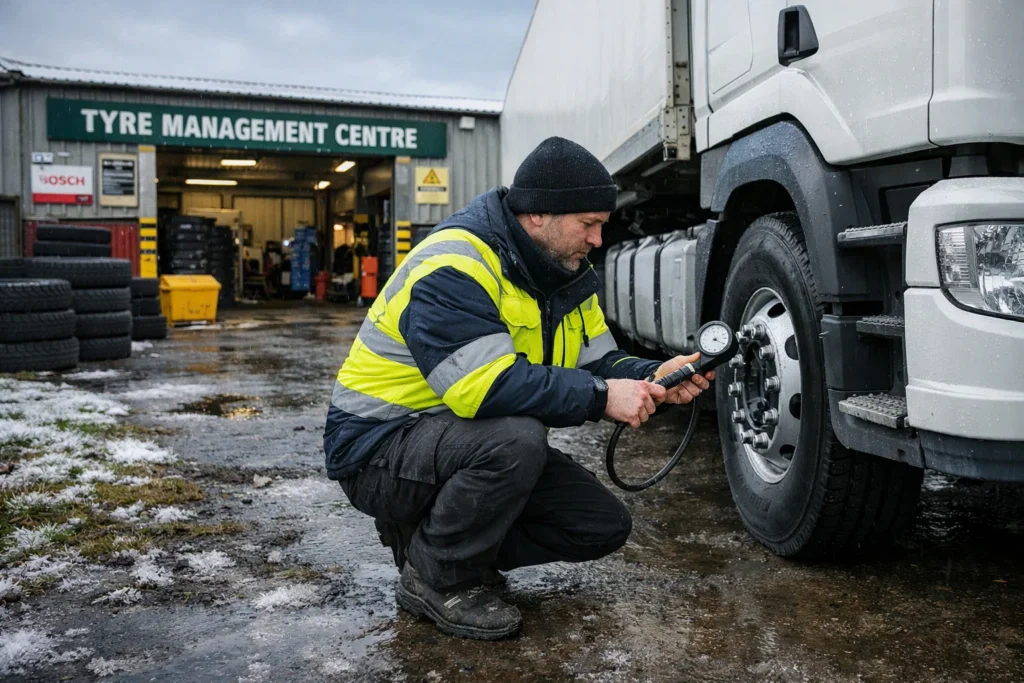
On paper, checking tyre pressure sounds simple. In reality, it is one of the hardest things to stay consistent with, especially across multiple depots and drivers.
Common challenges include:
- Drivers skipping checks during busy shifts
- Tyre gauges that are unreliable or missing
- Temperature fluctuations that change pressure overnight
- Lack of visibility across the fleet
By the time a tyre looks visibly low, it has often been underinflated for days or weeks. During that time, it has been burning extra fuel and wearing faster.
The good news is that new digital tools are making this much easier to manage.
How Digital Tyre Management Helps
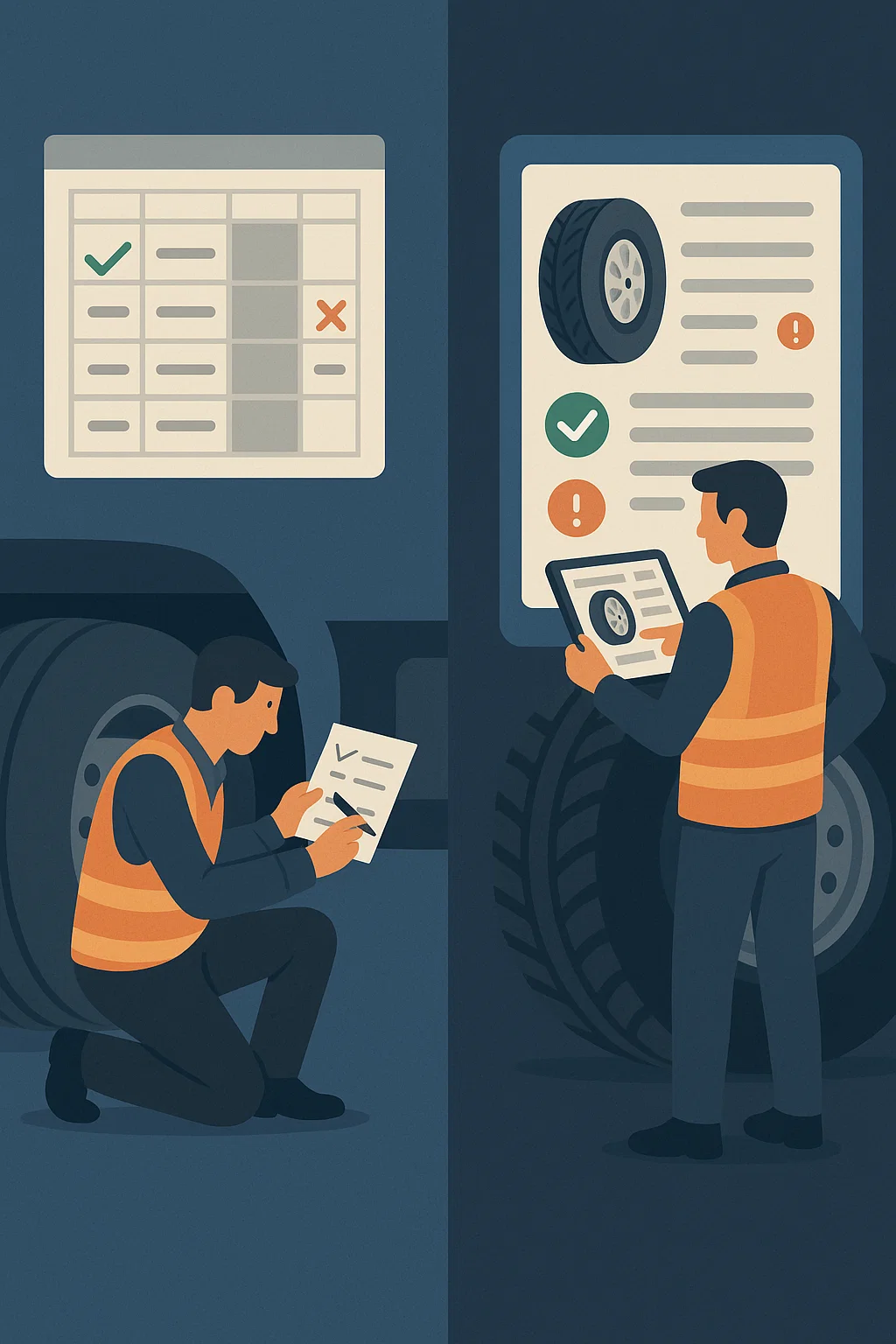
Modern fleet platforms such as TyreOps give operators full visibility over tyre performance. You can see inspection data, pressure records, and tread depth across every vehicle in one dashboard.
Instead of relying on paper forms or driver notes, you get accurate, real-time information that helps you act before small issues become expensive problems.
This means:
- Low pressures can be identified early
- Inspections are tracked automatically
- Reminders and alerts keep teams accountable
- Historical data helps identify recurring issues
Some fleets even connect live Tyre Pressure Monitoring Systems (TPMS) directly to the software. When a tyre loses pressure, a notification is sent instantly, allowing the fleet team to take action before it affects safety or efficiency.
How Temperature Plays a Role
Tyre pressure naturally changes with temperature. For every 10°C drop, you lose about 1 PSI. That means a tyre inflated perfectly in the afternoon could be underinflated by morning if the temperature drops overnight.
For fleets operating across different climates or long distances, this can create constant variation. Regular checks and data-driven alerts are the best way to stay consistent. A connected system helps track this automatically, removing the guesswork and keeping pressures stable throughout the year.
More Than Fuel Efficiency: The Safety Factor
Fuel savings are important, but tyre pressure also has a huge impact on safety. Tyres in poor condition or running below their recommended pressure are one of the most common causes of roadside breakdowns and DVSA prohibitions.
Keeping pressures within the correct range improves grip, braking, and handling, especially under load or in wet conditions. It also helps vehicles pass compliance checks more easily and supports your fleet’s duty of care obligations.
From an insurance point of view, showing that your fleet uses a system to monitor and manage tyre health can also help strengthen claims and demonstrate proactive risk management.
Tyre Pressure and the Environment
When tyres roll with too much resistance, engines use more fuel, which means higher emissions. Correct tyre pressures are one of the simplest and cheapest ways to reduce your fleet’s carbon footprint.
For fleets working toward sustainability or ESG targets, tyre management is a measurable, low-cost improvement that starts showing results immediately. A few PSI of difference across a fleet can mean thousands of litres of diesel saved every year, along with a noticeable cut in CO₂ output.
Turning Tyre Pressure Into a KPI
The most efficient fleets treat tyre pressure as a performance metric, not just a maintenance task.
You can track:
- Average pressure deviation across the fleet
- Fuel spend linked to tyre condition
- Tyre replacement intervals
- Number of pressure-related alerts resolved
Platforms such as TyreOps for Fleet Operators make it easy to collect this data automatically. With all tyre records in one place, you can see trends, calculate savings, and prove the link between maintenance discipline and operational costs.
Once tyre pressure becomes a measurable KPI, it stops being something you chase reactively. It becomes part of how you manage fleet efficiency overall.
Bringing It All Together
The impact of tyre pressure on fuel efficiency in commercial fleets is impossible to ignore. Even small drops in pressure create extra resistance, burn more fuel, and shorten tyre life. Across a large operation, those small losses add up to major costs.
Digital tyre management tools make it easier than ever to stay in control. By tracking pressures, inspections, and performance data through systems like TyreOps, fleet managers can reduce fuel waste, extend tyre life, and improve overall safety.
Maintaining proper tyre pressure is not just good practice; it is a competitive advantage. It saves fuel, cuts emissions, keeps vehicles compliant, and ensures your drivers stay safe on the road.