Most fleets already know how expensive tyres can be, yet very few can clearly explain the full journey their tyres take once they enter service. A tyre might start on an articulated trailer, move to a tractor unit during a rotation, go for retreading months later and eventually end up scrapped after an unexpected failure. Without a joined-up system, it becomes incredibly difficult to understand what actually happened along the way. This is where tyre lifecycle management becomes so important.
When the entire lifecycle is recorded digitally, fleets gain a level of visibility that simply does not exist when inspections and tyre movements rely on paper or scattered spreadsheets. TyreOps is designed to give operators this clarity by capturing every meaningful event from day one.
Below, we break down how digital tyre lifecycles work, why consistent tyre event tracking is essential and how TyreOps helps fleets reduce waste, strengthen compliance and control costs in a practical, everyday sense.
What tyre lifecycle management means for a modern fleet
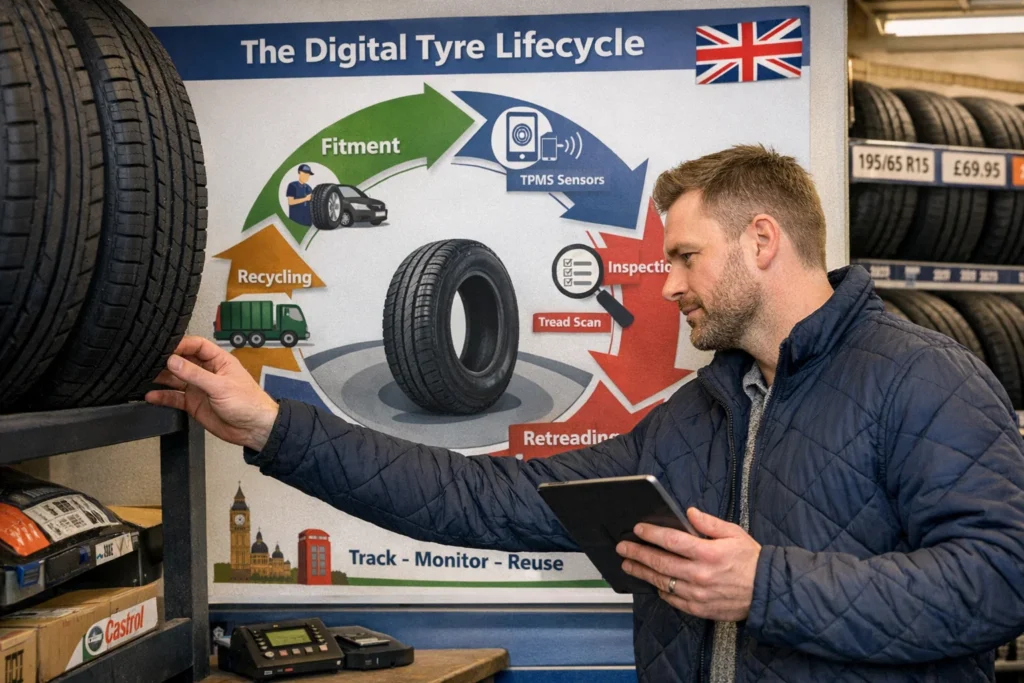
The idea behind tyre lifecycle management is quite simple. Instead of treating tyres as consumables that disappear into a large maintenance budget, fleets monitor each casing through its entire lifespan. TyreOps records everything that happens along the way, from fitment to inspections, retreading and finally disposal.
This approach creates a genuine history for each tyre. If there is a failure, managers can look back and see whether a defect was noted earlier. If one brand seems to be wearing out faster, the data will show that. Over time, fleets develop a far more accurate understanding of tyre performance, which helps with purchasing decisions, stock control and long-term budgeting.
For a closer look at the inspection side of the process, the TyreOps inspections workflow is explained here.
Why tyre event tracking matters more than most people realise
Most tyre problems do not appear suddenly. They build slowly. Heat, irregular wear, minor cuts and low pressure all contribute. When these issues are not logged consistently, fleets often replace tyres earlier than necessary or miss opportunities to save casings through repair work.
Digital tyre event tracking, which sits at the heart of TyreOps, keeps every depot on the same page. Technicians follow the same steps, record the same information and capture photos that offer clarity later on. Over time, this reduces confusion and builds a reliable picture of tyre behaviour across the fleet.
Fleets usually see the biggest improvements in a few specific areas.
1. Earlier detection of avoidable failures
When technicians follow the same workflow, small issues are spotted sooner. A minor sidewall cut, for example, may need monitoring rather than immediate removal. With clear digital evidence, decisions become much easier to justify.
2. Improved safety and compliance
Digital inspection records are far easier to present during a DVSA audit than loose paperwork. The TyreOps compliance tools help fleets remain consistent.
3. Better control of tyre waste
Fleets often scrap tyres early because the cause of the problem is not understood. Tyre lifecycle management helps identify patterns that lead to premature failures, such as misalignment or overloading.
4. Reduced miscommunication between depots
When all reports are standardised, depot-to-depot differences disappear and every tyre follows the same journey through the system.
How TyreOps structures tyre lifecycle events
TyreOps builds tyre lifecycle management around clear event types. Each one represents a point where something changes. Because events are recorded consistently, fleet managers no longer rely on guesswork or partial notes.
Fitments
The lifecycle begins when a tyre is fitted to a vehicle. TyreOps records the asset, position, date and technician. From here, everything else builds on this initial event.
Routine inspections
Technicians record tread depth, pressure readings, wear patterns and sidewall condition. Photos can be attached to create a reliable, visual history.
Defects and repairs
If a defect is spotted, it is categorised and logged on the spot. When a repair is completed, the event sits directly under the same tyre ID.
Rotations and inter-depot transfers
Tyres often move around a fleet. Digital tracking ensures each transfer is recorded so the lifecycle remains intact.
Retreading and casing handling
For fleets that retread regularly, this stage is vital. TyreOps logs casings leaving the depot, tracks their return and records the new lifecycle after retreading.
Scrap and disposal events
The final stage of tyre lifecycle management comes when a tyre is removed permanently. TyreOps records the scrap reason, tread depth, defect type and disposal method. These insights help identify trends that may otherwise go unnoticed.
Where the real value of tyre lifecycle management appears
The events themselves are only part of the story. The real value comes from TyreOps turning these events into patterns and insights. Dashboards reveal:
- brand performance differences
- wear rates compared across vehicles
- early indicators of misalignment
- common defect categories
- depot-level performance
- seasonal wear trends
- tyres likely to be replaced soon
This level of clarity is invaluable. A fleet may discover, for example, that tyres are being removed early because a specific depot is taking a more cautious approach than the rest of the operation. Once identified, the policy can be refined and aligned.
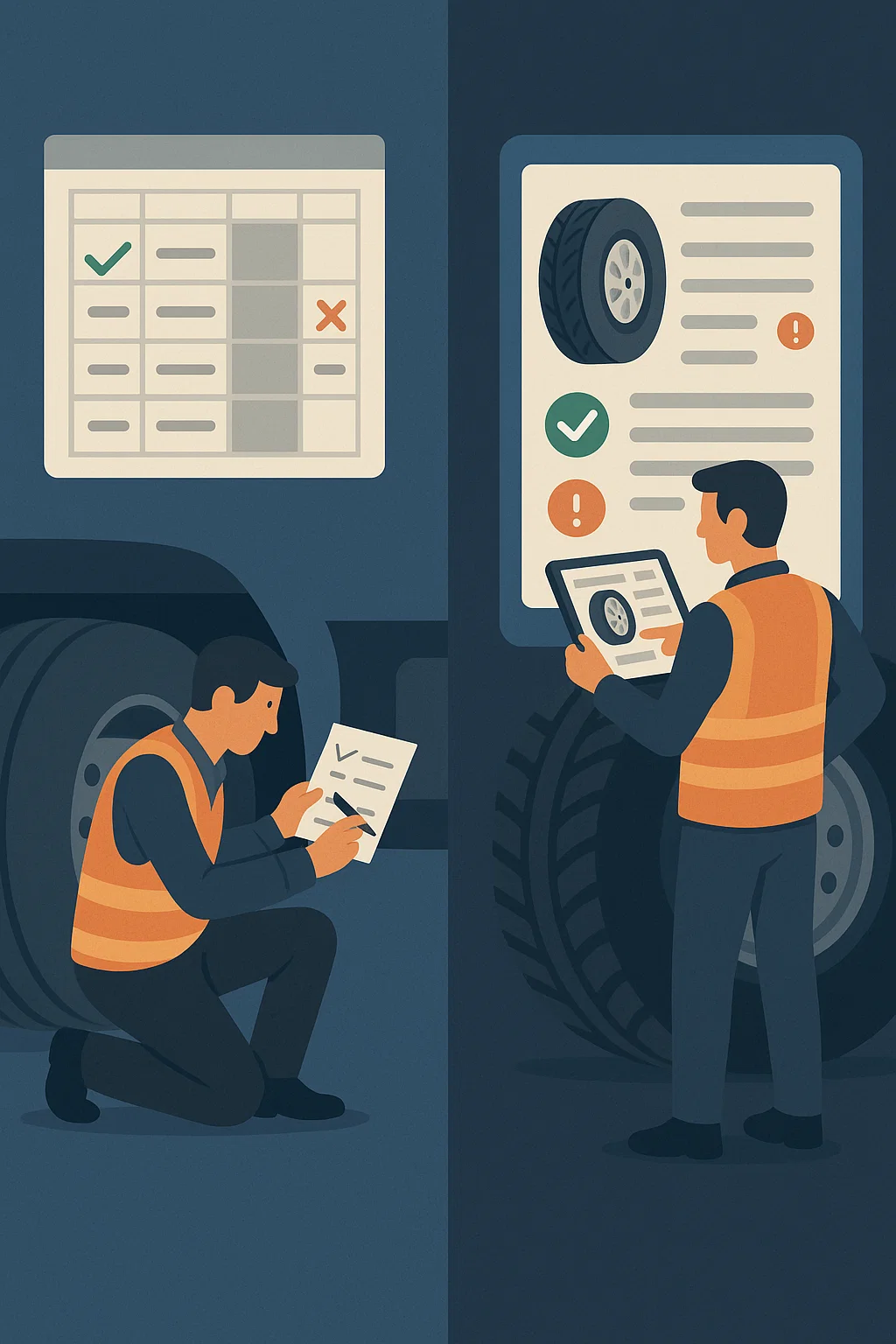
If you have previously used spreadsheets or manual notes, you can compare the difference here.
FAQs
How does TyreOps support tyre lifecycle management?
TyreOps captures every stage of a tyre’s journey. Events such as fitments, inspections, repairs, retreading and scrap decisions are linked together to form a complete lifecycle record.
Can tyre lifecycle management help reduce fleet costs?
Yes. Better visibility helps identify trends that lead to premature failures, improving tyre use and reducing unnecessary replacements.
Is tyre lifecycle management useful for compliance?
Digital records make it easier to prepare for audits. TyreOps stores photos, timestamps and technician details that support DVSA requirements.
Can TyreOps manage tyre lifecycles across multiple depots?
It is designed for precisely that. TyreOps standardises the process so every depot works in the same way.
Does tyre lifecycle management improve retread planning?
Yes. When casings are tracked properly, fleets can recover more value and reduce the number of casings lost during the retread cycle.