DVSA enforcement activity continues to intensify. In 2025 alone, over 12,000 immediate prohibitions were issued for tyre-related defects on commercial vehicles in Great Britain. For tyre businesses, particularly those serving fleet customers, understanding and meeting DVSA requirements is not optional, and a DVSA tyre compliance checklist is the simplest way to stay on top of them.
This checklist covers the practical steps every UK tyre shop should follow to maintain compliance, avoid penalties, and protect their customers.
Understanding the Legal Framework for DVSA Tyre Compliance
UK tyre regulations are governed primarily by the Road Vehicles (Construction and Use) Regulations 1986, enforced by the DVSA (Driver and Vehicle Standards Agency). Key requirements apply to:
- Minimum tread depth across the correct measurement area
- Tyre condition (no cuts, bulges, or exposed cord)
- Correct fitment (matching sizes and types per axle)
- Appropriate load and speed ratings
- TPMS functionality (for vehicles equipped with the system)
The DVSA Tyre Compliance Checklist
1. Tread Depth Verification
The legal minimum in the UK is 1.6mm across the central three-quarters of the tread breadth, around the entire circumference. For motorcycles over 50cc, the minimum is 1mm.
What to do:
- Measure tread depth at multiple points across the tread face
- Use a calibrated tread depth gauge (not the 20p coin test for professional work)
- Record measurements digitally with timestamps
- Flag any tyre below 3mm as an advisory, as most safety organisations recommend replacement at this point
2. Tyre Condition Assessment
Beyond tread depth, tyres must be free from defects that could compromise safety.
Check for:
- Sidewall bulges or deformations
- Cuts or cracks that expose the casing
- Objects embedded in the tread
- Signs of under-inflation damage (excessive shoulder wear)
- Age-related deterioration (check the DOT code: replace tyres over 10 years old)
3. Correct Fitment Verification
Mixing tyre types across an axle is illegal and dangerous.
Verify:
- Both tyres on each axle are the same size, construction type, and tread pattern
- Radial and cross-ply tyres are not mixed on the same axle
- Load index and speed rating meet or exceed the vehicle manufacturer’s specification
- Run-flat tyres are correctly fitted according to manufacturer guidelines
4. Pressure and TPMS Checks
Incorrect tyre pressure affects safety, fuel consumption, and tyre life.
Ensure:
- Tyres are inflated to the vehicle manufacturer’s recommended pressure
- TPMS sensors are functioning correctly (mandatory on vehicles manufactured after November 2014)
- Pressure is checked when tyres are cold for accurate readings
- Any TPMS warning lights are investigated and resolved
5. Record Keeping
This is where many tyre businesses fall short. Good records protect you in the event of an audit, customer dispute, or legal claim.
Maintain records of:
- Every inspection carried out, with date, vehicle details, and findings
- Tread depth measurements with technician identification
- Photographic evidence of tyre condition at time of inspection
- Any recommendations made to the customer
- Work carried out, parts used, and torque settings applied
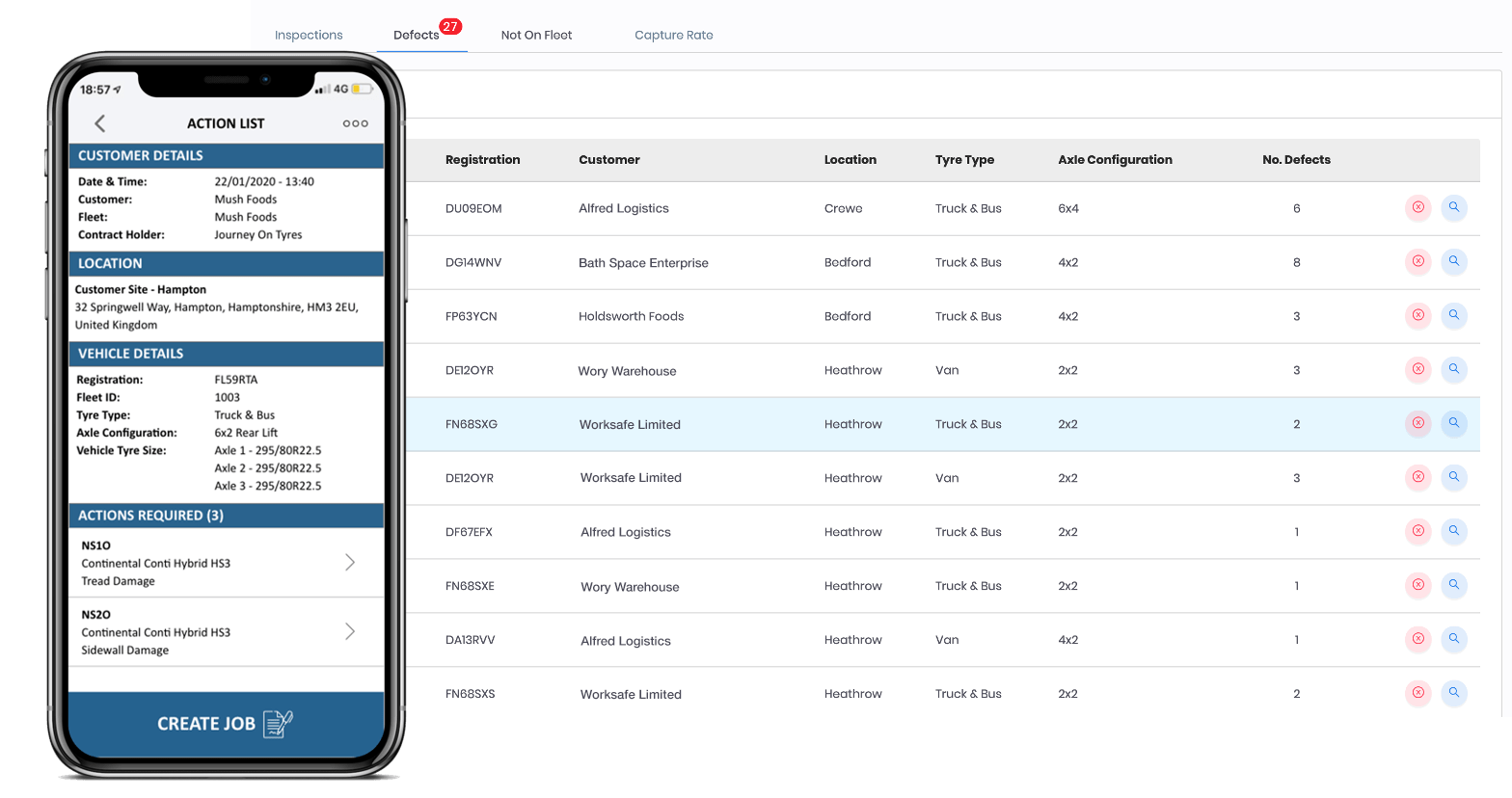
Digital Tyre Inspection Records With TyreOps
Manual record-keeping (clipboards, paper forms, filing cabinets) creates compliance risk. Paper gets lost, handwriting is illegible, and there is no audit trail proving when an inspection was actually carried out.
TyreOps digital inspections solve this by capturing:
- Tread depth measurements with automatic legal limit checking
- Timestamped photographs of every tyre inspected
- Technician identification and digital signatures
- Automatic DVSA-compliant report generation
- Secure cloud storage with instant retrieval for audits
Every inspection automatically creates a digital record that cannot be altered after the fact, which is exactly what DVSA auditors want to see.
Penalties for Non-Compliance
The financial consequences of tyre non-compliance are severe:
- Up to £2,500 fine per illegal tyre on a car or light vehicle
- 3 penalty points per tyre: a vehicle with four illegal tyres means 12 points and an automatic driving ban
- Immediate prohibition for commercial vehicles, preventing the vehicle from moving until defects are rectified
- Operator licence risk for fleet operators with repeated compliance failures
Beyond the fines, there is the reputational damage of being associated with unsafe vehicles and the legal liability if a tyre-related accident occurs.
Next Steps
If this DVSA tyre compliance checklist shows that your inspection process relies on paper forms or inconsistent digital tools, now is the time to upgrade. Book a demo to see how TyreOps handles DVSA-compliant inspections, or explore our compliance glossary for detailed explanations of every term and regulation mentioned in this guide.
TyreOps Team
Compliance Team at TyreOps
Sharing practical insights on tyre business management, technology and industry best practices.