Fleet tyre budgets are under pressure. Rising raw material costs, supply chain disruptions, and increasing demand for premium tyre specifications have pushed unit prices up significantly over the past two years. For most UK fleet operators trying to reduce fleet tyre costs, the days of simply negotiating a better discount from your supplier and calling it a strategy are over.
The operators we work with who consistently control their tyre spend have moved beyond unit price negotiations. They use operational data to identify where money is actually being wasted, and it is rarely where they first expect. Premature tyre failures, suboptimal replacement timing, inconsistent pressure management, and fragmented supplier relationships typically cost more than the difference between a cheap tyre and an expensive one.
Here is how to build a data-driven approach that will reduce fleet tyre costs and deliver sustainable savings.
Reduce Fleet Tyre Costs by Tracking Cost-Per-Mile
Cost-per-mile (CPM) is the foundation of every other decision in fleet tyre management. Without it, you are comparing purchase prices when you should be comparing total lifecycle costs, and those are very different things.
Setting up CPM Tracking
Accurate CPM tracking requires capturing four data points for every tyre fitted to your fleet:
- Purchase cost: including any delivery charges and fitting costs
- Fitment date and mileage: when the tyre was fitted and the vehicle’s odometer reading at that point
- Removal date and mileage: when the tyre was removed and the odometer reading
- Removal reason: worn out, damaged, irregular wear, or other
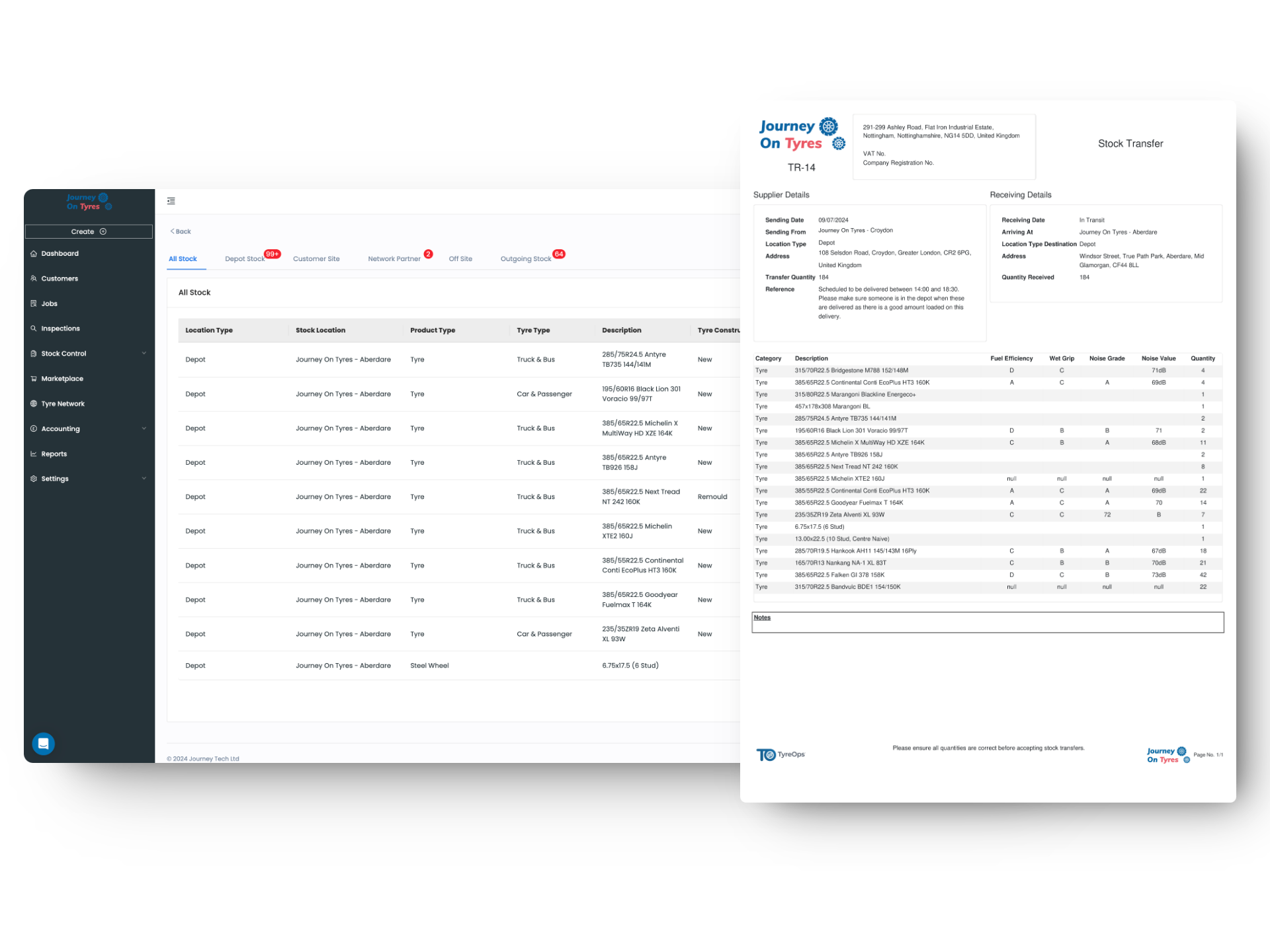
With this data, CPM calculates itself. The challenge is capturing it consistently across every vehicle, every depot, and every tyre event. This is where a dedicated fleet tyre management system earns its keep: it makes data capture part of the normal workflow rather than an additional administrative task.
Using Cost-Per-Mile Data to Drive Decisions
Once you have three to six months of CPM data, patterns emerge that are invisible without structured tracking:
- Brand comparison: you may discover that the mid-range tyre you have been fitting on drive axles delivers a lower CPM than the premium alternative, or vice versa. Without CPM data, these comparisons rely on supplier claims and gut feeling.
- Vehicle-level anomalies: a vehicle consistently delivering poor CPM compared to similar vehicles on similar routes points to a mechanical issue (alignment, suspension, braking) that is destroying tyres prematurely.
- Route impact: urban delivery routes with frequent kerbing, tight turns, and stop-start driving produce measurably different CPM than long-haul motorway work. Understanding this helps you specify the right tyre for each application.
- Seasonal variation: CPM often worsens in winter months due to road conditions, salt, and temperature effects on rubber compounds. Tracking this helps you budget more accurately.
Our reporting tools generate CPM analysis automatically from fitment and removal data, broken down by any combination of vehicle, route, brand, axle position, and time period. No spreadsheet assembly required.
Optimise Replacement Timing
Replacing tyres too early wastes usable tread. Replacing them too late risks blowouts, roadside breakdowns, DVSA prohibitions and, in the worst case, accidents. The optimal replacement point balances cost, safety, and operational risk.
The Hidden Cost of Early Replacement
Some fleet operators set conservative replacement thresholds, removing tyres at 3mm or even 4mm of tread depth, to minimise breakdown risk. The safety intention is sound, but the financial impact is significant.
A typical steer tyre starts life with approximately 12 to 14mm of tread depth. The legal minimum is 1.6mm for cars and light vehicles, and 1mm for heavy goods vehicles (across the central three-quarters of the breadth). Removing a tyre at 4mm instead of 2mm means discarding roughly 20% of its usable life. On a fleet of 200 vehicles with an average of six tyres each, that adds up to a substantial amount of unnecessary expenditure annually.
Finding the Right Threshold
The correct replacement threshold depends on your operation:
- Long-haul vehicles that can be scheduled into depots for planned maintenance can safely run tyres closer to the legal limit, with regular inspections to catch defects
- Vehicles on unpredictable routes or operating in remote areas may warrant earlier replacement because the cost of a roadside failure is disproportionately high
- Customer-facing vehicles may need earlier replacement for appearance reasons, regardless of the remaining tread
Whatever threshold you choose, apply it consistently and track the results. If you currently replace at 3mm, try moving to 2.5mm on a subset of vehicles and compare the outcomes over six months. Data will tell you whether the additional mileage justifies the marginally higher risk.
Predictive Replacement Scheduling
With consistent CPM data, you can predict when each tyre will reach your replacement threshold and schedule the changeover in advance. This eliminates emergency replacements (which always cost more) and allows you to batch orders for better pricing.
Implement a Pressure Management Programme
Tyre pressure management is the single highest-return, lowest-cost intervention available to fleet operators. Under-inflated tyres increase fuel consumption, accelerate wear, generate excess heat, and are more susceptible to damage and blowouts. Over-inflated tyres reduce grip and cause uneven wear patterns.
The Numbers
Research by the RHA (Road Haulage Association) and tyre manufacturers consistently shows that:
- A tyre running 20% below its recommended pressure loses approximately 25% of its tread life
- The same under-inflation increases fuel consumption by roughly 3%
- Severe under-inflation (40%+ below recommended) multiplies blowout risk dramatically
For a fleet of 100 HGVs, a 3% fuel saving and 25% improvement in tyre life represents a substantial annual reduction in operating costs.
Building a Pressure Programme
An effective pressure management programme includes:
- Defined pressure specifications for every vehicle and axle configuration in your fleet, documented and accessible to all technicians
- Regular pressure checks as part of your scheduled maintenance programme (not just when a tyre looks flat)
- Driver training on pre-departure pressure checks and the use of workshop pressure gauges
- TPMS (tyre pressure monitoring systems) where fitted, with alerts routed to your maintenance team for follow-up
- Tracking and accountability: recording pressure readings at every check and flagging vehicles with persistent pressure issues
The difficulty is not understanding the importance of pressure management. It is maintaining discipline across your fleet over time. A digital system that prompts pressure checks during scheduled maintenance and flags deviations from specification helps sustain the programme.
Evaluate Retreading Economics
Retreading is one of the most effective cost-reduction strategies available to commercial fleet operators, yet many UK operators underutilise it. A quality retread from a reputable manufacturer typically costs 40 to 60% of a comparable new tyre and delivers 80 to 100% of the original tread life when applied to a sound casing.
Which Casings to Retread
Not every casing is suitable for retreading. Your casing management process should assess:
- Brand: premium manufacturer casings are engineered for multiple lives and have higher acceptance rates at retread plants
- Condition: the casing must be free from sidewall damage, bead area defects, and impact breaks
- Age: most retreaders will not accept casings beyond a certain age (typically 5 to 7 years from original manufacture)
- Previous retreads: premium casings can typically support two or three retreads before the casing is exhausted
Managing the Retread Pipeline
Effective retread management requires tracking casings from removal through inspection, shipment to the retreader, quality assessment, retreading, return, and re-fitment. At each stage, casings can be rejected, lost, or delayed.
Your tyre management system should track every casing in the pipeline with its current status, location, and expected return date. Without this visibility, casings get lost at the retreader, rejected casings are not replaced, and the financial benefit of retreading quietly erodes.
Measuring Retread Performance
Track the CPM of retreaded tyres separately from new tyres. If your retreads are consistently delivering CPM within 10 to 15% of new tyres at 40 to 60% of the cost, your retread programme is working well. If the gap is wider, investigate the cause: it may be a casing quality issue, a retreader quality issue, or an application mismatch.
Consolidate Your Supplier Base
Supplier fragmentation is a hidden cost driver for many fleet operators. When tyre purchasing is decentralised, with each depot ordering from its preferred local supplier, you lose volume buying power, consistency of specification, and visibility of total spend.
The Benefits of Consolidation
- Volume pricing: concentrating spend with fewer suppliers gives you the weight to negotiate better pricing, rebates, and credit terms
- Consistent specification: ensuring every depot fits the same tyre brand and model in each application makes CPM comparisons meaningful and eliminates specification creep
- Simplified administration: fewer suppliers means fewer invoices, fewer accounts to manage, and simpler reconciliation
- Better data: consolidated purchasing data from a single system gives you accurate total spend analysis and supplier performance metrics
How to Consolidate Without Creating Risk
Complete reliance on a single supplier creates vulnerability. If they have a supply issue, your entire fleet is affected. We recommend:
- A primary supplier handling 70 to 80% of volume, with a strong service level agreement covering availability, response times, and pricing
- One or two secondary suppliers for specialist requirements (e.g., retreading, niche sizes) and as backup in case of supply disruption
- A clear specification policy that defines approved brands and models by application, preventing ad-hoc purchasing decisions at depot level
Negotiating With Data Behind You
When you sit down to negotiate with suppliers, data is your strongest asset. If you can show them your total annual spend, broken down by size, brand, and location, along with CPM performance data for their products, you are negotiating from a position of knowledge rather than guesswork. Suppliers respect buyers who understand their own data, and they are more likely to offer competitive terms to retain the business.
The TyreOps fleet management platform generates supplier performance reports that give you exactly this level of detail, updated in real time from your operational data.
Putting It All Together to Reduce Fleet Tyre Costs
To reduce fleet tyre costs, you do not need to find a single big win. You need to make incremental improvements across multiple areas (CPM tracking, replacement timing, pressure management, retreading, and supplier consolidation) and sustain those improvements over time through consistent data capture and analysis.
The operators who achieve the best results treat tyre management as a continuous improvement programme, not a one-off project. They review their data monthly, adjust their strategies quarterly, and hold their suppliers and their own teams accountable to measurable targets.
If you want to see how data-driven tyre management works in practice, book a demo and we will walk you through the platform using your fleet’s profile. Or sign up today to begin capturing the data that drives real cost reduction. No credit card required, no contract, and full support from our team throughout.
TyreOps Team
Content Team at TyreOps
Sharing practical insights on tyre business management, technology and industry best practices.