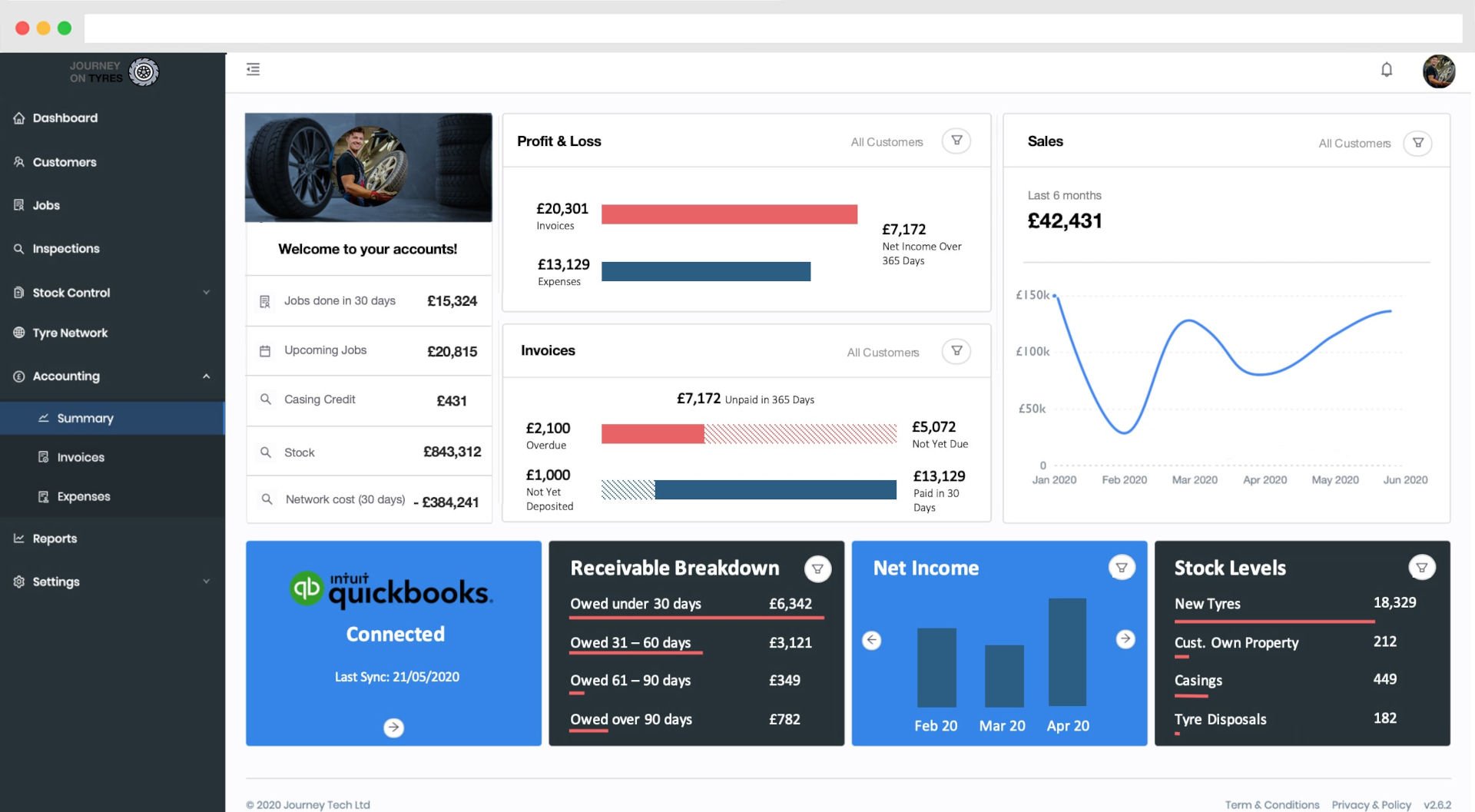
The UK tyre industry is at an inflection point. Businesses that operated comfortably on paper-based systems and spreadsheets five years ago are finding themselves outpaced by competitors who have embraced digital tools. The difference is not subtle: it is the difference between knowing your stock levels in real time and discovering a popular size is out of stock when a customer walks in. If you are weighing up what to do about it, this tyre management software guide is the place to start.
This guide covers everything you need to know about tyre management software in 2026: what it does, who needs it, how to choose the right platform, and how to measure the return on your investment.
What Is Tyre Management Software?
Tyre management software is a specialist platform designed to handle the operational complexity of running a tyre business. Unlike generic workshop or garage management tools, tyre-specific software understands the unique workflows that tyre businesses deal with daily.
At its core, tyre management software typically covers:
- Job management: creating, assigning and tracking tyre fitting work from booking through to invoicing
- Stock control: tracking every tyre in your operation including new stock, customer property, casings and disposals
- Digital inspections: conducting and recording vehicle tyre inspections with photo evidence and compliance reports
- Invoicing and accounting: generating invoices automatically from completed work and syncing with accounting tools
- Reporting: analysing business performance across revenue, technician productivity, stock turnover and customer profitability
The best platforms go further, offering marketplace integration, tyre network management, and native mobile apps for field technicians.
Who Needs Tyre Management Software?
The short answer: any tyre business that wants to grow, stay competitive, or simply stop losing money to inefficiency.
Retail Tyre Shops
Independent tyre shops benefit from faster job turnaround, online booking capabilities, and automated invoicing. If your team is still writing job sheets by hand, you are spending hours on admin that could be spent fitting tyres.
Commercial Tyre Operators
Commercial tyre operations deal with additional complexity: casing management, manufacturer credits, multi-depot coordination, and fleet customer contracts. Specialist software handles all of this without adding administrative overhead.
Fleet Operators
Fleet managers need cost-per-mile analysis, tyre lifecycle tracking, DVSA compliance documentation, and supplier management. Without a centralised system, this data lives in scattered spreadsheets that quickly become unreliable.
Tyre Wholesalers
Wholesale operations require trade account management, dynamic pricing, bulk order processing, and stock distribution across multiple locations. Manual processes simply cannot keep pace with the volume.
Tyre Management Software Guide: Key Features to Look For
Not all tyre software is created equal. Here are the features that separate effective platforms from basic tools.
Cloud-Based Architecture
Cloud-native software means no local installation, no servers to maintain, and access from any device. Your team can work from the workshop, the office, or on-site, all on the same real-time data. Look for platforms that offer genuine cloud architecture, not just desktop software accessed through a remote connection.
Mobile-First Design
Field technicians need mobile tools that work on-site. A proper mobile app should allow job completion, photo capture, digital inspections, and stock lookups without returning to the office. If the mobile experience feels like an afterthought, it probably is.
Accounting Integration
Your tyre software should connect directly with your accounting platform, whether that is Xero, QuickBooks, or Sage. Automatic invoice syncing eliminates double entry and keeps your books accurate in real time.
DVSA-compliant Inspections
For businesses serving fleet customers, digital tyre inspections with photo evidence and tread depth recording are essential. The system should generate DVSA-compliant reports automatically, not require manual formatting.
Open API
An open API means your tyre software can connect with any other system your business uses: CRM, fleet management, supplier portals, or bespoke internal tools. Closed ecosystems limit your growth.
How to Evaluate Tyre Management Software
These five steps give you a simple route through the process. For a closer look at the criteria themselves, read how to choose tyre management software.
Step 1: Map Your Workflows
Before looking at any software, document your current processes. How do jobs flow from booking to completion? Where are the bottlenecks? What data are you capturing manually that should be automated?
Step 2: Define Your Requirements
Separate your needs into “must have”, “should have”, and “nice to have”. Be honest about what you actually need today versus what you might need in two years.
Step 3: Request Demos
Do not rely on marketing websites alone. Book demonstrations with your shortlisted providers and bring specific scenarios from your business. A good demo should show your workflow, not a generic presentation.
Step 4: Check Integrations
Confirm that the software integrates with the tools you already use. Ask specifically about your accounting software, any supplier systems, and your CRM if you have one.
Step 5: Calculate ROI
Estimate your potential savings before you buy. Factor in time saved on admin, reduction in errors, and additional revenue from improved efficiency.
The Cost of Doing Nothing
Every month without proper tyre management software costs your business in ways that are often invisible:
- Lost revenue from stockouts you did not see coming
- Wasted admin time on manual data entry, paper job sheets, and spreadsheet updates
- Compliance risk from incomplete inspection records and audit trails
- Customer churn from slow service and billing errors
- Missed insights because your data is scattered across disconnected systems
The businesses that thrive in 2026 and beyond will be the ones that treat their operational software as a competitive advantage, not a cost centre.
Putting This Tyre Management Software Guide to Work
If you have read this tyre management software guide because you are considering a system for the first time, or thinking about switching from an existing one, the best starting point is a hands-on demonstration. You can also browse the full list of TyreOps features and our pricing beforehand.
Book a demo with TyreOps to see how the platform handles your specific workflows, or start a free 14-day trial to experience it firsthand. No credit card required, no commitment, and full access to every feature.
TyreOps Team
Content Team at TyreOps
Sharing practical insights on tyre business management, technology and industry best practices.